
Cranial access demands absolute mechanical precision. When you create a burr hole or remove a bone flap, millimeter-level deviations can compromise the dura mater and underlying brain tissue. Surgeons rely on flawless instrument operation to navigate the transition between rigid cortical bone and delicate neurological structures. The core mechanical challenge here is maintaining smooth tool engagement. Inconsistent torque, bit chatter, or delayed auto-stop mechanisms directly increase the risk of penetrating trauma, thermal necrosis, and prolonged operating room times. Addressing these mechanical challenges requires a rigorous technical evaluation framework. Procurement and clinical teams must focus on how specific engineering tolerances, motor types, and perforator designs ensure controlled movement. Precise gripping, reliable safety mechanisms, and consistent power delivery dictate the success of the procedure. Understanding the physics of bone cutting and the engineering behind these devices ensures safer surgical outcomes and more efficient workflows.
Smooth tool engagement relies on the synergy between continuous motor torque, precise cutting accessory geometry, and immediate clutch-release mechanisms.
Neurosurgical procedures require a highly controlled workflow, transitionally moving from perpendicular burr hole perforation to lateral craniotome cutting.
Pneumatic and electric high control neurosurgical drills offer distinct trade-offs regarding tactile feedback, RPM consistency under load, and OR infrastructure requirements.
The quality of tool engagement directly influences the structural integrity of the bone flap and the ease of subsequent reimplantation.
Evaluating a craniotomy drill requires assessing not just peak performance, but performance degradation over repeated sterilization cycles.
Optimal drill-to-bone contact requires a continuous cutting action without skipping, binding, or demanding excessive axial pressure from the surgeon. Smooth engagement means the cutting accessory shears through bone tissue efficiently, utilizing the motor's rotational speed rather than the surgeon's physical force. The physics of this process change depending on the surgical stage. You must understand the distinct mechanical requirements of the two primary phases of cranial access.
Perpendicular perforation involves creating foundational burr holes. This stage requires high axial stability. The surgeon applies direct downward pressure against the convex surface of the skull. The drill bit must bite into the outer table immediately without walking or skidding across the bone. As the bit progresses through the softer diploe layer and reaches the inner table, the mechanical resistance changes. Smooth engagement here means the drill maintains its cutting efficiency without requiring the surgeon to push harder. Most importantly, this stage requires a mechanism that stops instantly once the inner table of the skull is breached.
Lateral craniotome routing connects these burr holes to elevate the bone flap. This routing phase demands high lateral cutting efficiency. The surgeon moves the handpiece horizontally, guiding the bit through the bone. Smooth engagement during this phase means the bit does not catch or bind on varying bone densities. The tool must feature a specialized guard to protect the dura mater while the bit moves horizontally through the skull. The transition from perpendicular drilling to lateral routing tests the versatility of the equipment.
Initial cortical bite: The bit must engage the hard outer table without skidding.
Diploic progression: The tool must clear softer, vascular bone debris rapidly to prevent clogging.
Inner table breach: The auto-stop mechanism must trigger within milliseconds of resistance loss.
Dural separation: The craniotome footplate must slide cleanly between the bone and the dura.
Lateral routing: The motor must sustain high RPMs against lateral resistance to cut the flap.
When a Craniotomy Drill fails to maintain smooth engagement, clinical risks escalate rapidly. Bit chatter and micro-vibrations severely reduce tactile feedback. This vibration increases surgeon fatigue and compromises the precise gripping necessary for delicate neurological maneuvers. Without smooth rotation, the instrument bounces against the bone rather than cutting it. You lose the physical sensation of the bone layers, making it difficult to anticipate the breach of the inner table.
Inefficient cutting leads directly to thermal necrosis. When a drill bit generates friction without effectively removing material, the localized temperature spikes. Bone tissue is highly sensitive to heat. Temperatures exceeding 47 degrees Celsius for more than a minute will cause irreversible osteonecrosis. This heat damages adjacent healthy bone cells, complicating bone flap reimplantation and delaying postoperative healing. Dead bone margins increase the risk of postoperative infections and non-union of the bone flap.
Erratic engagement introduces the catastrophic plunge risk. If lateral stabilization fails or the auto-stop mechanism delays its release upon breaching the inner cranial table, the bit can cause penetrating trauma to the fragile brain tissue. A delayed clutch release of even a fraction of a second can result in a dural tear or direct cortical injury. This turns a routine cranial opening into a complex repair scenario, increasing patient morbidity.
Inconsistent tool engagement also produces irregular bone flap margins. Jagged edges make osteosynthesis difficult. A poorly cut bone flap rarely fits perfectly back into the cranial defect. You end up with wide gaps that require additional bone cement or titanium mesh to cover. This leads to aesthetic deformities and structural instability for the patient.
Engagement Quality | Tactile Feedback | Thermal Profile | Bone Margin Quality | Plunge Risk |
|---|---|---|---|---|
Smooth & Consistent | High sensitivity to bone layers | Low heat generation | Clean, precise cuts | Minimal |
Erratic & Binding | Masked by heavy vibration | High friction, necrosis risk | Jagged, irregular edges | High |
A viable surgical drill must demonstrate verifiable consistency in torque delivery across varying bone densities. The human skull is not uniform. The temporal region presents different mechanical resistance compared to the thicker occipital bone. The instrument must power through dense cortical bone without stalling or lurching. Evaluating these tools requires analyzing empirical data on torque maintenance and clutch reliability under simulated clinical loads. You cannot rely on free-spinning RPM numbers; you need data on how the motor performs when buried in dense bone.
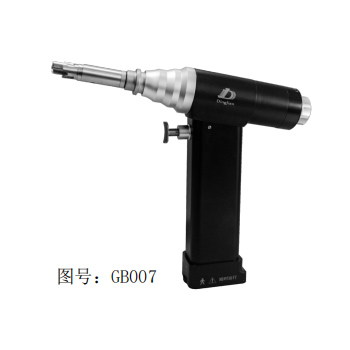
The safety of cranial perforation relies heavily on mechanical auto-stop systems. These systems utilize a dual-bit design featuring an inner and outer drill bit. As the surgeon applies downward pressure against the skull, the clutch engages, locking the inner and outer bits together to cut through the bone. The outer bit handles the bulk of the bone removal, while the inner bit leads the cut and acts as the sensory probe for the clutch mechanism.
Once the inner bit breaches the inner table of the skull and encounters the soft dura mater, the physical resistance drops. This sudden loss of pressure instantly disengages the clutch. The inner bit stops rotating immediately, preventing it from plunging into the brain. The outer bit also stops cutting, leaving a thin shelf of bone that protects the dura. The engineering tolerances here must be microscopic to ensure instantaneous disengagement. The internal springs and cam mechanisms must react to pressure changes measured in ounces.
Spring tension calibration determines the exact pressure required to keep the clutch engaged.
Cam lock designs ensure the inner and outer bits rotate in perfect synchronization under load.
Debris clearance channels prevent bone dust from jamming the clutch release mechanism.
Material hardness of the clutch components dictates the lifespan of the auto-stop reliability.
Progressive trigger mechanisms allow surgeons to modulate revolutions per minute seamlessly. A high-quality high control neurosurgical drill provides linear acceleration, giving the operator absolute control over the cutting speed. You do not want an on/off switch; you need a throttle. This allows the surgeon to start the hole slowly to prevent skidding, then ramp up the speed for efficient cutting.
Torque maintenance under load is equally critical. When the cutting accessory encounters highly dense bone, inferior motors will stall or bind. Advanced motor architectures compensate for this resistance automatically. They draw more power to maintain a steady RPM, preventing sudden lurching that could damage surrounding tissue. This constant torque delivery ensures the bit continues to shear bone rather than getting stuck and twisting the surgeon's wrist.
The physical design of the cutting accessory dictates its efficiency. Flute design, rake angles, and sharpness retention in craniotomes and router bits determine how well the tool shears bone. Proper geometry ensures the rapid clearance of bone debris. If debris accumulates in the flutes, the bit will bind, interrupting engagement and generating dangerous heat. Spiral flutes are generally preferred for their ability to eject bone dust rapidly from the cutting site.
The dural guard, or footplate, is an essential safety feature on the craniotome attachment. This integrated footplate slides between the inner table of the skull and the dura mater. Its precise anatomical curvature prevents snagging during lateral cuts. It acts as a physical shield while guiding the cutting blade smoothly along the intended trajectory. The thickness of the footplate is a delicate balance; it must be thin enough to slide into the epidural space without compressing the brain, but thick enough to withstand the lateral forces of cutting without bending.
Choosing between pneumatic and electric systems fundamentally alters the operating room setup and the tactile experience of the surgeon. Pneumatic systems have a long history of reliability in neurosurgery. They offer an excellent power-to-weight ratio and run cool, as the expanding compressed gas naturally chills the handpiece. The internal mechanics are relatively simple, making them highly durable. However, they require dedicated compressed nitrogen infrastructure. They also involve heavy, stiff hoses that can cause drag during delicate procedures, requiring the surgical assistant to manage the hose weight constantly.
Electric systems provide consistent torque at lower RPMs and operate much more quietly. They feature programmable console settings, allowing teams to set specific maximum speeds for different attachments. The electric motor provides immediate feedback and precise speed control. The trade-off often involves a slightly heavier handpiece due to the internal copper windings and magnets, and the need for sterile cable management. However, modern electric cables are generally lighter and more flexible than pneumatic hoses.
Feature | Pneumatic Systems | Electric Systems |
|---|---|---|
Power Source | Compressed Nitrogen Gas | Electrical Console |
Torque Consistency | Can fluctuate with line pressure drops | Highly consistent across all RPM ranges |
Thermal Profile | Naturally cooling via gas expansion | Requires internal cooling mechanisms |
Ergonomics | Lighter handpiece, heavy hose drag | Heavier handpiece, lighter flexible cable |
Noise Level | High pitched whine | Quieter, smoother operation |
Weight distribution directly impacts a surgeon's ability to maintain careful placement during prolonged procedures. The center of gravity in the handpiece, when fully assembled with attachments and cutting tools, must rest naturally in the surgeon's hand. Poor balance causes wrist fatigue and diminishes tactile feedback. If the drill is top-heavy, the surgeon must exert constant grip force just to keep it upright, which degrades fine motor control.
A well-designed craniotomy drill facilitates controlled movements analogous to handling sensitive brain tissue. The grip texture must provide security even when covered in blood and irrigation fluid. The trigger placement must accommodate different hand sizes without requiring awkward finger extensions. Ensuring the surgeon can feel subtle changes in bone density through the handpiece is the ultimate test of ergonomic design.
High-speed cutting generates significant heat. Integrated irrigation systems are necessary to cool the cutting site and clear bone debris, maintaining smooth engagement. The ergonomics of these irrigation clips and tubing must be evaluated. They must deliver fluid precisely to the cutting interface without obstructing the surgeon's line of sight or interfering with the grip.
Some systems feature internal irrigation channels built directly into the handpiece and attachments. This eliminates external clips and tubing, providing a cleaner line of sight. However, internal channels are harder to clean and sterilize. External clip-on irrigation is easier to replace if clogged but adds bulk to the distal end of the tool. You must evaluate which trade-off works best for your sterile processing department and your surgical team.
Surgical drills endure brutal sterilization environments. Repeated autoclave cycles expose the equipment to high heat, moisture, and pressure. Over time, this exposure degrades internal motor bearings, compromises seals, and wears down clutch mechanisms. There is a direct correlation between sterilization degradation and the loss of smooth tool engagement. Bearings that lose their lubrication will introduce micro-vibrations, while degraded seals allow moisture to damage internal electrical components.
Evaluating a system requires reviewing data on how many sterilization cycles the handpiece can withstand before performance drops below acceptable clinical thresholds. You need to know the exact maintenance requirements. Does the handpiece require manual lubrication before every autoclave cycle? Are there specific temperature limits for the sterilization process? Failure to adhere to these exact specifications will destroy the internal mechanics rapidly.
Autoclave temperatures typically reach 132 degrees Celsius, stressing metal tolerances.
Moisture penetration through degraded O-rings causes internal corrosion.
Repeated thermal expansion and contraction loosen internal press-fit components.
Lubricant breakdown leads to bearing failure and excessive handpiece heat during use.
A modular vendor ecosystem provides significant operational flexibility. Systems where a single console and motor can power various attachments for craniotomies, spinal procedures, and neuro-endoscopy streamline inventory and training. Modularity allows hospital systems to maximize equipment utilization across different surgical specialties, ensuring that the technology remains actively deployed rather than sitting idle in storage.
When you select a cranial opening surgical tool, you are buying into the vendor's entire attachment catalog. You must assess the quality of their perforators, craniotomes, straight attachments, and angled attachments. A great motor is useless if the vendor's cutting accessories are poorly manufactured. Evaluate the ease of swapping attachments during a procedure. The locking mechanisms should be intuitive, secure, and operable with slippery, gloved hands.
Switching drill platforms introduces a learning curve. Transitioning from pneumatic to electric systems alters the tactile feedback and trigger sensitivity. Surgeons accustomed to the acoustic feedback and weight of a pneumatic drill must recalibrate their muscle memory. An electric drill maintains RPMs differently under load, which changes how the surgeon applies pressure.
Mandatory wet-lab, cadaver, or high-fidelity simulation training is essential. These sessions allow surgeons to evaluate the feel of the new equipment and build confidence in handling sensitivity before operating on live patients. You cannot expect a surgeon to perform a complex craniotomy with an unfamiliar drill without prior hands-on practice. The training must cover assembly, troubleshooting, and the specific tactile feedback of the auto-stop mechanism.
Conduct initial dry-run assembly training with the scrub nurses and surgical techs.
Schedule wet-lab sessions using synthetic bone models to demonstrate cutting speed.
Perform cadaver labs to allow surgeons to feel the auto-stop mechanism on actual bone.
Run simulated troubleshooting scenarios for stalled bits or clogged irrigation.
Improper hospital sterilization practices lead to premature equipment failure. Flash sterilization or failing to lubricate specific components according to manufacturer guidelines will destroy a handpiece rapidly. Preventative maintenance schedules must be strictly enforced. You cannot wait for the drill to fail in the middle of a procedure before sending it out for service.
Vendor service-level agreements should guarantee regular inspections and calibration checks to ensure auto-stop mechanisms and clutch interfaces remain perfectly calibrated over the equipment's lifespan. Calibration drift in a perforator clutch is a silent failure. The tool will appear to function normally until it fails to stop at the inner table. Regular, documented testing of the release mechanism using standardized force gauges is the only way to mitigate this risk.
Request in-service OR trials to gather direct surgeon feedback on tactile control, grip stability, and engagement smoothness during actual bone flap creation.
Establish strict preventative maintenance schedules aligned with vendor guidelines to prevent calibration drift in auto-stop mechanisms.
Mandate cadaver or simulation training for all neurosurgical staff when transitioning between pneumatic and electric drill platforms.
Review empirical sterilization durability data before finalizing procurement to ensure long-term mechanical reliability.
A: Stalling typically occurs due to torque limitations in the motor when encountering dense cortical bone. It can also be caused by dull cutting accessories that fail to shear tissue, or inadequate debris clearance where bone fragments clog the flutes and bind the bit.
A: It uses a dual-bit clutch mechanism. The inner and outer bits rotate together under downward pressure. When the inner bit breaches the skull and reaches the soft dura, resistance drops. This loss of pressure instantly disengages the clutch, stopping the inner bit to prevent brain injury.
A: Multiple burr holes create safe entry and exit points. They allow the surgeon to insert the craniotome's dural guard beneath the skull safely. The surgeon then uses the craniotome to cut laterally between these holes, eventually freeing the complete bone flap.
A: The craniotome features an integrated footplate that extends below the cutting blade. This footplate slides carefully between the inner table of the skull and the dura mater, acting as a physical shield that prevents the rotating blade from contacting sensitive brain tissue.
A: Neither is universally better; they offer different advantages. Electric drills provide highly consistent torque under load and operate quietly. Pneumatic drills offer a superior power-to-weight ratio and run cooler, but require compressed gas infrastructure and involve heavier hoses.
A: Servicing frequency depends on usage and manufacturer specifications, but typically ranges from every 6 to 12 months. Frequent autoclave cycles accelerate wear on bearings and seals, necessitating strict adherence to preventative maintenance schedules to ensure safety mechanisms remain calibrated.
A: Irrigation clears bone debris from the cutting flutes to prevent binding and stalling. It also provides critical thermal management, cooling the drill bit and the surrounding bone to prevent heat-induced osteonecrosis, which can compromise bone flap healing.


