
Micro-vibrations, rotational runout, and mechanical play carry a hidden clinical cost during high-precision osteotomy and internal fixation procedures. In dense cortical bone, the margin of error remains razor-thin. Mechanical backlash—the lost motion or clearance between gear teeth and drive components—directly degrades tactile feedback. This play increases the risk of thermal necrosis, compromises trajectory accuracy, and accelerates surgeon fatigue during complex bone preparation.
Selecting an Orthopedic Bone Drill requires looking beyond raw RPMs or peak torque. You must evaluate internal transmission architecture, long-term calibration stability, and ergonomic design. A drill with excessive backlash translates to lateral bit movement, creating oversized pilot holes and reducing screw purchase. By understanding how modern engineering mitigates gear play, clinical teams can ensure predictable surgical outcomes and safeguard patient safety.
Mechanical backlash directly compromises drill bit concentricity, leading to trajectory deviation, vibration-induced micro-fractures, and oversized pilot holes.
Advanced gear architectures (such as zero-backlash planetary gears or strain wave/harmonic drives) and direct-drive brushless DC (BLDC) motors represent critical technical requirements for modern surgical power tools.
Autoclave sterilization cycles accelerate internal wear; evaluating the sealing, material composition, and coefficient of thermal expansion of a durable bone surgery drill is essential for maintaining zero-play tolerances over time.
Ergonomics, active vibration dampening, and lightweight housing in a surgeon comfort drill handpiece directly correlate with reduced mechanical backlash transmission and improved operative precision.
Standard rotary instruments inherently experience gear play, radial shaft runout, and axial motor tolerance. Physics dictates that moving parts require clearance to operate without seizing. However, cumulative mechanical wear in the drive train translates directly into lateral drill bit movement, commonly known as wobble. We must distinguish between torsional backlash, which is the rotational lag when changing directions, and translational runout at the drill tip. Both forms of play disrupt the exact positioning required for orthopedic procedures. When a surgeon applies lateral force during a complex osteotomy, any internal clearance magnifies at the cutting edge. This magnification turns a microscopic internal gap into a macroscopic clinical error.
Engineers measure this play in microns, but surgeons feel it as a loss of control. The drive shaft, bearings, and gear teeth all contribute to the total system backlash. Over time, repeated stress cycles deform these components slightly. A brand-new tool might exhibit zero perceptible play, but after fifty surgeries, the internal geometry changes. This degradation is not a flaw in the surgeon's technique; it is a mechanical reality of rotating assemblies under load.
Precision is non-negotiable in specific surgical applications. Consider pedicle screw placement during spine surgery. A deviation of less than 0.5mm due to bit wobble can cause a cortical wall breach. This failure often leads to severe neurological or vascular injury. The surgeon relies on the drill to follow the exact trajectory established by the awl or guide wire. If the drill bit wanders because of internal gear play, the screw will not seat correctly.
In total joint arthroplasty, guide pin deviation causes the misalignment of cutting blocks. This misalignment directly compromises implant longevity and joint biomechanics. A femoral cut that is off by a single degree alters the load distribution across the polyethylene insert, accelerating wear and leading to early revision surgery. Maxillofacial and craniofacial reconstructions present similar risks. Drilling near delicate nerves and vascular structures leaves no room for unpredictable play. Any lateral movement increases the risk of soft-tissue wrapping and collateral damage. A stable drill bit ensures the surgeon cuts exactly where intended.
Surgical Procedure | Acceptable Runout Tolerance | Primary Risk of Excessive Backlash |
|---|---|---|
Spinal Fusion (Pedicle Screws) | < 0.05 mm | Cortical breach, neurological damage |
Total Knee Arthroplasty (TKA) | < 0.10 mm | Cutting block misalignment, implant wear |
Maxillofacial Reconstruction | < 0.03 mm | Soft tissue wrapping, nerve damage |
Trauma (Plating) | < 0.15 mm | Oversized pilot holes, screw pull-out |
Mechanical play generates micro-vibrations and excess friction at the bone interface. This friction correlates directly with thermal necrosis, which is friction-induced bone death occurring above 47°C. Dead bone cannot support osteointegration. When a drill bit wobbles, it rubs against the sides of the hole rather than cutting cleanly. This rubbing generates massive amounts of heat, even with copious irrigation.
Furthermore, wobble creates oversized or irregular pilot holes. These compromised holes drastically reduce screw pull-out strength and initial fixation stability, especially in osteoporotic bone. If the threads of a cancellous screw do not have healthy, intact bone to grip, the construct will fail under physiological loading. Clinical procurement teams must establish strict baseline success criteria. A quantitative limit on rotational runout is essential. For example, runout should remain below 0.05 mm at a 100 mm extension under variable axial loads. Meeting these metrics ensures the tool performs safely during dense bone penetration.
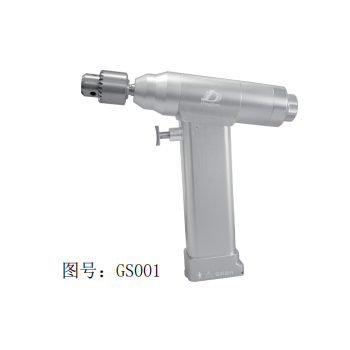
Traditional reduction gearboxes are highly prone to wear, friction, and backlash. Every gear interface introduces a potential point of failure. Modern systems utilize direct-drive brushless DC (BLDC) motors to eliminate these intermediary components. By coupling the motor directly to the output shaft, engineers remove the gears entirely, thereby eliminating gear backlash. This design provides immediate torque response and significantly reduces the overall weight of the handpiece.
When gears are necessary, planetary gear systems with pre-loaded angular contact bearings minimize lost motion. These setups excel in high-torque applications like reaming the femoral canal. The planetary arrangement distributes the load across multiple gear teeth simultaneously, reducing the stress on any single point. Strain wave, or harmonic, gearing systems represent the gold standard for zero-backlash high-torque transmission. They utilize flexible splines to maintain continuous tooth engagement. This design eliminates the clearance gaps found in traditional spur gears, providing exceptional accuracy even under heavy side loads.
Rigid shaft alignment relies heavily on bearing quality. Hybrid ceramic and sealed stainless-steel bearings, rated to ABEC 7 or ABEC 9 precision classes, maintain strict rotational paths. These premium components resist deformation under heavy loads. Ceramic balls are harder and smoother than steel, reducing friction and heat generation within the handpiece. They also resist the corrosive effects of repeated sterilization cycles better than standard steel bearings.
Tight manufacturing tolerances, measured in single-digit microns, prevent the introduction of play during high-speed operation under side-load pressure. The bearing housing must be machined to exact specifications to prevent the outer race from spinning or shifting. Even a few microns of clearance in the bearing seat will translate to noticeable wobble at the drill tip. Engineers use advanced coordinate measuring machines (CMM) to verify these dimensions during production.
The interface between the drill and the bit is a common source of runout. Keyless, quick-release chuck mechanisms offer convenience but are vulnerable to mechanical degradation over time. The internal springs and jaws wear down, allowing the bit to shift axially and radially. Legacy single-point locking systems often allow bit slippage, especially when drilling through dense cortical bone.
Conversely, dual-locking collets and tri-lobe drive connections secure the bit firmly. They prevent axial play and ensure the rotational force transfers directly to the cutting edge without deviation. A tri-lobe design provides three distinct points of contact, centering the bit perfectly within the chuck. This geometric locking mechanism is far superior to friction-based systems, ensuring the bit remains concentric regardless of the applied torque.
Internal mechanical stability directly shapes the external user experience. Eliminating backlash reduces high-frequency harmonic vibrations. This reduction directly supports a surgeon comfort drill handpiece by mitigating hand-arm vibration syndrome (HAVS) and operative fatigue. A stable tool provides accurate tactile feedback loops, allowing the user to feel changes in bone density. When a surgeon breaches the far cortex, they need to feel that sudden drop in resistance instantly. Backlash dampens this feedback, making it harder to judge depth accurately.
Center-of-gravity balancing also plays a crucial role. A well-balanced tool reduces ergonomic strain during long-axis drilling. When the surgeon does not have to fight the tool's weight or vibration, precision naturally improves. The handpiece should rest naturally in the web of the hand, with the weight distributed evenly between the motor and the battery or cable attachment.
Housing materials must resist thermal expansion and physical impact. Medical-grade PEEK, titanium alloys, and anodized aluminum are common choices. You must analyze the risk of galvanic corrosion and differential thermal expansion when dissimilar metals exist in the gear train and housing. If the internal gears expand faster than the outer housing during sterilization, they will bind and wear prematurely.
A durable bone surgery drill maintains its internal geometric tolerances despite repeated exposure to high-torque stress. Titanium offers an excellent strength-to-weight ratio and is highly resistant to corrosion. PEEK provides excellent electrical insulation and can withstand repeated autoclaving without degrading. The choice of material directly impacts the tool's lifespan and its ability to maintain zero-backlash performance over thousands of cycles.
Repeated autoclave cycles destroy internal components. Steam, heat up to 134°C, and high pressure degrade synthetic lubricants and alter gear meshing tolerances. When lubricant breaks down, metal-on-metal contact increases, rapidly accelerating wear and introducing backlash. Hermetically sealed, double-walled motor units prevent moisture ingress. Keeping moisture out prevents rust-induced gear pitting, which is a primary cause of progressive backlash.
Hospitals must evaluate the IPX rating of the handpiece. A higher rating indicates better protection against fluid ingress during surgery and cleaning. Some advanced systems use magnetic couplings to transmit torque through a solid titanium wall, completely isolating the motor from the external environment. This design eliminates the need for dynamic shaft seals, which are notorious for failing and allowing moisture into the motor housing.
Modern drills incorporate real-time torque and force-sensing electronics. These sensors detect resistance changes at the bone boundary instantly. Intelligent motor control algorithms can compensate for minor mechanical play. They dynamically adjust drive speed and rotational direction to maintain a steady cutting path, enhancing overall safety.
For example, if the sensor detects a sudden spike in torque, indicating the bit is binding, the controller can instantly reverse the motor for a fraction of a second to clear the chips before resuming forward rotation. This active compensation prevents the bit from jamming and reduces the stress on the internal gears, thereby extending the life of the transmission and minimizing the development of backlash.
Drills engineered with zero-backlash planetary gears and premium ceramic bearings carry a higher initial procurement cost. Precision manufacturing requires expensive machinery and rigorous quality control. However, hospitals must look beyond the initial purchase price. Cheaper drills with standard spur gears and steel bearings will develop backlash much faster, requiring frequent repairs and early replacement.
Investing in high-quality engineering reduces maintenance intervals and prevents scrapped procedures due to equipment failure. A drill that maintains its calibration for five years is far more valuable than one that needs a transmission rebuild every twelve months. Procurement teams should request data on the mean time between failures (MTBF) and the expected lifespan of the gear train under normal clinical use.
Hospitals often weigh the benefits of modular systems against dedicated tools. Modular systems feature interchangeable attachments, offering clinical versatility. You can switch from a drill to a reamer to a sagittal saw using the same motor unit. However, they inherently introduce coupling interfaces where mechanical backlash can occur. Every connection point is a potential source of play.
Dedicated single-function drills offer higher precision and lower mechanical complexity. They eliminate the modular connection points, thereby reducing the risk of runout. A dedicated drill will always outperform a modular attachment in terms of concentricity and tactile feedback. The trade-off is that the hospital must purchase and maintain multiple dedicated handpieces, which requires more storage space and a larger initial capital investment.
Improper lubrication, delayed seal replacement, and manual cleaning protocols accelerate gear tooth wear. This neglect rapidly reintroduces backlash into the system. To mitigate this risk, facilities must establish strict adherence to OEM preventive maintenance schedules. Utilizing automated washing and lubrication systems ensures consistent care. Routine acoustic and vibration testing of handpieces helps identify early signs of mechanical degradation.
Wipe down the handpiece immediately after surgery to prevent blood and bone debris from drying on the surface.
Process the handpiece through an automated washer-disinfector using pH-neutral enzymatic cleaners.
Apply OEM-approved synthetic lubricant to the chuck and moving parts before sterilization.
Perform a visual and tactile inspection of the chuck and trigger mechanism to check for binding or excessive play.
Sterilize the handpiece according to the manufacturer's validated autoclave parameters, ensuring adequate drying time.
Surgeons accustomed to older, high-play drills may overcompensate when using a highly responsive, zero-backlash system. This muscle memory can lead to initial plunging or over-penetration during surgery. A drill with zero runout cuts much faster and more aggressively than a worn-out tool. Implementing vendor-led dry-lab training sessions is vital.
These sessions focus on tactile feedback calibration and familiarizing the team with the new handpiece ergonomics before live procedures. Surgeons need to practice on synthetic bone models to adjust their applied pressure and get a feel for the immediate torque response of a direct-drive BLDC motor. Proper training ensures a smooth transition and prevents adverse events during the initial adoption phase.
Mechanical backlash is an engineering challenge solved by high-tolerance manufacturing, advanced bearing architectures, and superior materials. Predictable surgical outcomes rely on eliminating rotational runout and micro-vibrations at the bone interface. Upgrading to precision-engineered power tools directly improves patient safety and operative efficiency.
Request technical specification sheets detailing gear tolerances and runout metrics in microns from all potential vendors.
Schedule an in-vivo or dry-lab trial to evaluate tactile feedback, trigger responsiveness, and ergonomic balance under heavy axial load.
Audit the manufacturer's long-term service agreements and autoclave-cycle warranties to ensure the equipment can survive your facility's sterilization volume.
Implement strict, automated preventive maintenance protocols to protect internal gear and bearing integrity over the lifespan of the tool.
A: Wear on gear teeth, degradation of bearings from repeated autoclave cycles, and loss of internal lubrication lead to increased clearance between moving parts. This clearance manifests as mechanical backlash and tip wobble.
A: Runout creates oversized or irregular pilot holes. This reduces the thread purchase of cortical or cancellous screws, compromising primary stability and significantly increasing the risk of mechanical implant failure.
A: Direct-drive connects the motor directly to the chuck, eliminating gear play and wear points. Geared drills use transmissions to alter torque and speed, which can introduce backlash if not precision-engineered.
A: Review OEM data on mean time between failures (MTBF), examine bearing materials like ceramic, check ISO certification standards, and verify the IPX rating for moisture resistance during steam sterilization.
A: Ergonomic designs with active vibration dampening prevent hand fatigue and loss of proprioception. This allows the surgeon to maintain precise trajectory control and tactile feedback during dense bone penetration.
A: Minor play can sometimes be corrected through factory recalibration, gear shimming, and bearing replacement. However, severe gear wear typically requires a complete transmission overhaul or full handpiece replacement.


