
In high-density cortical bone drilling, a drop in RPM or torque directly increases the risk of thermal necrosis, bit jamming, plunging, and compromised screw fixation. Procurement teams and surgical directors face a saturated market of power tools claiming consistent performance. However, many fail to maintain output under variable anatomical loads or degrade rapidly after repeated sterilization cycles. Evaluating an Orthopedic Drill requires moving beyond baseline specifications. You must understand the internal feedback mechanisms, power delivery systems, and maintenance realities that guarantee a stable load under clinical conditions. We will examine how motor intelligence, battery discharge curves, and ergonomic designs prevent stalling during dense bone penetration. By analyzing these mechanical and electrical components, surgical teams can select equipment that ensures precise osteotomies, protects surrounding tissue, and withstands the harsh realities of daily operating room use.
Torque-to-RPM Ratios Dictate Success: A true stable load bone drill relies on smart feedback loops that automatically adjust power draw to maintain constant RPM and a consistent linear feed rate when resistance increases.
Power Source Trade-Offs: While battery-powered systems offer unmatched maneuverability by eliminating hoses, evaluating their cell chemistry and discharge curves is critical to preventing mid-procedure power drops.
Ergonomics Impact Output: An ergonomic surgical handpiece is not just for comfort; proper weight distribution and trigger responsiveness directly influence a surgeon's ability to maintain optimal axial pressure and utilize drill guides without fatigue.
Sterilization is the Enemy of Output: High-temperature, high-pressure steam sterilization degrades motor seals and battery capacity over time, making rigorous maintenance protocols essential for long-term load stability.
Surgical drilling requires absolute precision across varying anatomical structures. The primary success criterion for any bone drilling system is its ability to transition seamlessly between different bone densities without stalling. When a bit passes from soft cancellous bone into the dense cortical bone of the femoral diaphysis, the mechanical resistance spikes instantly. The tool must absorb this resistance without losing rotational speed or requiring the surgeon to apply excessive manual force. Preventing bit breakage and avoiding dangerous plunging into soft tissue depend entirely on the motor's ability to sustain output under these sudden load shifts.
A reliable system maintains a predictable cutting rhythm. Surgeons rely on tactile feedback to gauge depth and bone quality. If the motor struggles, that feedback becomes distorted. Establishing baseline requirements means demanding a system that handles maximum cortical density without a noticeable drop in performance. This consistency ensures clean osteotomies, accurate pilot holes, and secure hardware placement. When drilling a 2.5mm pilot hole for a 3.5mm cortical screw, even a minor hesitation in the motor can alter the trajectory and compromise the thread purchase.
The relationship between torque and RPM forms the mechanical foundation of bone drilling. Rotational speed (RPM) clears debris and cuts tissue, while torque provides the rotational force necessary to keep the bit moving against friction. When resistance increases, a standard motor will naturally lose RPM unless it can immediately draw more torque. Maintaining a constant RPM is non-negotiable. If the speed drops, the bit stops cutting cleanly and begins to tear or crush the bone architecture.
This dynamic directly impacts the linear feed rate, which is the speed at which the drill advances through the bone. A fluctuating RPM forces the surgeon to alter their push force, leading to uneven feed rates. An erratic linear feed rate compromises the geometry of the pilot hole. For screws to achieve maximum purchase, the internal threads of the bone must be cut sharply and consistently. A balanced torque-to-RPM ratio guarantees that the bit does the work, preventing the surgeon from having to lean into the instrument.
Bone Tissue Temperature Thresholds and Clinical Outcomes
Temperature Threshold | Exposure Time | Bone Tissue Response | Clinical Consequence |
|---|---|---|---|
Below 40°C | Indefinite | Normal cellular function maintained | Optimal osseointegration |
47°C | 1 Minute | Onset of osteocyte death | Delayed healing, weak screw purchase |
50°C | 30 Seconds | Rapid protein denaturation | High risk of aseptic loosening |
Above 60°C | Instantaneous | Irreversible thermal necrosis | Implant failure, required revision surgery |
When a drill stalls or loses speed under load, the clinical consequences are immediate and severe. The most pressing risk is thermal necrosis. Bone tissue is highly sensitive to heat. If the drill bit slows down, friction increases exponentially. Temperatures exceeding 47 degrees Celsius for more than one minute will cause irreversible death to the surrounding osteocytes. This necrotic zone prevents proper osseointegration, leading to aseptic loosening of screws and implants months after the initial procedure.
Output drops also increase the likelihood of mechanical failures. A stalled bit can easily jam in the cortical layer. The sequence of a stall typically follows a predictable and dangerous pattern:
The bit encounters high-density cortical bone, causing an immediate spike in friction.
The motor fails to draw sufficient current to maintain the required torque.
Rotational speed drops, causing the cutting flutes to catch rather than shave the bone.
The surgeon instinctively applies more axial pressure, worsening the bind.
The bit jams completely, transferring the rotational force to the surgeon's wrist or snapping the bit inside the patient.
Alternatively, if the motor suddenly regains speed after a stall, it can cause the bit to plunge uncontrollably through the far cortex, risking damage to nerves, blood vessels, or adjacent organs. Consistent output is a fundamental safety requirement.
Power Source Performance and Infrastructure Requirements
Power Source | Sustained Load Capacity | Maneuverability | Infrastructure Required |
|---|---|---|---|
Battery-Powered | High (Dependent on charge state) | Excellent (No cords) | Charging stations, battery inventory |
Pneumatic | Maximum (Continuous) | Limited (Tethered to hose) | Nitrogen tanks or central air supply |
Direct Electric | Maximum (Continuous) | Moderate (Tethered to cord) | Dedicated power consoles |
Battery-powered systems have transformed the operating room by eliminating the physical constraints of hoses and cables. This absence of tethers provides superior maneuverability. Surgeons can achieve unrestricted directional control, which is vital in complex workflows like trauma reconstruction or awkward anatomical approaches. The freedom to rotate the tool without fighting a heavy pneumatic line reduces physical strain and streamlines the surgical process.
However, cordless systems face inherent vulnerabilities regarding voltage drops. As the battery depletes, its ability to deliver peak current diminishes. Under heavy load, a partially discharged battery may cause the motor to stall. Evaluating an orthopedic drill requires a close look at its lithium-ion discharge rates. High-quality systems use advanced cell chemistry, such as Lithium Iron Phosphate, to provide a flat discharge curve. This ensures sustained torque until the battery is nearly empty. Facilities must also account for the necessity of intraoperative battery swaps during prolonged cases, requiring strict inventory management by the circulating nurse.
Pneumatic and direct electric systems remain the standard for procedures requiring massive, sustained power. Their primary advantage is continuous, uninterrupted power delivery. Because they draw from an external source, they can handle maximum load indefinitely without any voltage sag or performance degradation. For major joint reconstructions or dense femoral reaming, this infinite run-time is a significant clinical advantage.
The drawback lies in their physical constraints. Pneumatic hoses are heavy, stiff, and require sterilization. They limit spatial freedom and can drag on the sterile field. Additionally, pneumatic systems require specialized operating room infrastructure, such as regulated nitrogen tanks or central medical air supplies. Line pressure drops can occur if the hospital's central system is overtaxed. Direct electric systems require bulky consoles and thick cables. These tethers force the surgical team to manage cords constantly, adding a layer of logistical complexity to the procedure.
Selecting the right power source requires matching the tool to the specific surgical volume and primary procedural types of the facility. Ambulatory surgery centers focusing on sports medicine, hand surgery, or foot and ankle procedures benefit immensely from the agility of battery-powered systems. The loads are generally lower, and the rapid turnover times favor cordless setups where equipment can be quickly swapped between rooms.
Conversely, Level 1 trauma centers and facilities performing high volumes of total hip and knee arthroplasties often require the brute force of pneumatic or direct electric systems. The continuous heavy loads of reaming acetabular cups or preparing femoral canals demand power sources that cannot deplete mid-cut. Many modern hospitals utilize a hybrid approach, stocking cordless drills for standard plating and screw insertion, while reserving tethered systems for heavy reaming and sawing.
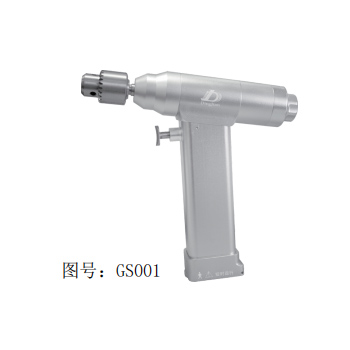
Modern surgical power tools rely on sophisticated electronics to manage mechanical stress. A stable load bone drill utilizes brushless DC motors equipped with Hall effect sensors and microprocessors. These components create an active feedback loop. The sensors constantly monitor the rotational position and speed of the motor. When the bit encounters dense cortical bone, the resistance causes a micro-second drop in RPM.
The microprocessor detects this drop instantly and commands the power delivery system to increase the electrical current via a Proportional-Integral-Derivative (PID) controller. This real-time torque adjustment happens faster than the human hand can perceive. It prevents RPM dips, ensuring the bit continues cutting smoothly rather than binding. This active power management separates clinical-grade smart drills from basic rotary tools, directly preventing dangerous plunging and minimizing the risk of thermal damage to the bone.
The internal gearing mechanism translates raw motor power into usable clinical torque. High-quality drills use precision-machined planetary gear sets to step down the high RPM of the brushless motor into the high-torque output required for bone penetration. These gears, typically machined from hardened stainless steel or titanium alloys, must be robust enough to handle sudden shock loads without stripping. The efficiency of this power transfer dictates how well the drill maintains its output under stress.
Trigger control works in tandem with the gearing. Variable speed triggers allow surgeons to modulate power intuitively. In many orthopedic workflows, keeping the drill trigger unlocked allows for immediate, controlled activation. A highly responsive trigger gives the surgeon the ability to feather the speed during delicate cortical breaches or ramp up to full power for deep pilot holes. This tactile control is necessary for managing load resistance safely without over-committing to a cut.
Drawing high current to maintain torque generates significant internal heat. If this heat is not managed, the motor will lose efficiency, and the handpiece will become too hot for the surgeon to hold safely. Effective thermal management systems are required for sustained performance. Engineers utilize internal heat sinks made of highly conductive metals to draw heat away from the motor coils and battery contacts.
Because surgical drills are sealed units designed to withstand sterilization, traditional cooling fans cannot be used. Instead, the design relies on passive thermal dissipation through the outer casing and specialized potting compounds that encase the electronics. The internal architecture must optimize airflow within the sealed chamber, distributing heat evenly to prevent localized hot spots. A drill that overheats under sustained load will trigger internal safety sensors, shutting down the tool mid-procedure to prevent permanent damage.
Physical fatigue directly compromises surgical precision. An ergonomic surgical handpiece is engineered to minimize the musculoskeletal strain on the surgeon's hand, wrist, and forearm. The most critical factor is the center of gravity. When heavy battery packs are attached, a poorly designed drill will feel front-heavy or back-heavy, forcing the surgeon to exert constant counter-force just to hold the tool level.
Proper weight distribution aligns the center of mass directly over the surgeon's grip. This balance reduces the moment arm on the wrist joint. During prolonged procedures, such as complex trauma reconstructions involving dozens of screws, this ergonomic advantage prevents cramping and tremors. A balanced handpiece allows the surgeon to focus entirely on the trajectory and depth of the drill bit, rather than fighting the weight of the tool itself.
Orthopedic drilling rarely happens freehand. Surgeons rely on precision instruments to dictate the angle and placement of pilot holes. A well-balanced handpiece must pair seamlessly with Load Neutral Drill Guides and Universal Drill Guides. These guides are necessary when plating with Dynamic Compression Plates (DCPs) and other fracture fixation hardware. The drill must interface smoothly with the guide barrel without binding.
If the drill is ergonomically awkward, the surgeon may inadvertently apply off-axis pressure against the drill guide. This lateral force creates friction between the bit and the guide, reducing the effective output of the motor and generating dangerous metal debris. An ergonomic design ensures that the surgeon's push force remains perfectly aligned with the guide, maximizing cutting efficiency and ensuring correct anatomical positioning for neutral or eccentric drilling.
All rotary tools generate vibration, but excessive hand-arm vibration degrades tactile feedback. Surgeons rely on the subtle vibrations transmitted through the drill to differentiate between hard cortical bone and soft cancellous bone. If the motor itself vibrates violently under load, it masks these anatomical signals. Structural isolation of the motor is necessary to dampen unwanted mechanical noise.
Engineers achieve this by mounting the internal motor assembly on elastomeric shock-absorbing dampeners within the outer casing. This isolation prevents the high-frequency vibrations of the gears and bearings from transferring directly into the surgeon's palm. Reducing vibration not only improves precision but also mitigates long-term occupational hazards for the surgical team, such as nerve fatigue and reduced grip strength over a long career.
Maintaining output under load is a partnership between the motor's torque and the surgeon's physical input. The surgeon must apply consistent, linear pressure—known as axial force—to keep the bit engaged with the bone. An ergonomic design facilitates this by aligning the grip angle with the axis of the drill bit. This pistol-grip alignment allows the force from the surgeon's forearm to transfer directly down the shaft of the bit.
When the grip angle is optimized, the surgeon does not need to force the bit. They simply guide it, allowing the motor to do the heavy lifting. If the ergonomics are poor, the surgeon may compensate by pushing harder, which can stall the motor or cause the bit to bend. Proper axial force application ensures that the drill operates within its optimal load parameters, maintaining a steady RPM and a clean cut.
The operating room environment requires absolute sterility, but the sterilization process is exceptionally hostile to precision electronics and mechanics. High-temperature and high-pressure steam sterilization (autoclaving) is the standard method for processing surgical power tools. A standard prevacuum cycle subjects the equipment to 134 degrees Celsius at 30 psi. Steam is highly invasive. Over time, it penetrates microscopic vulnerabilities in unsealed components, leading to internal condensation.
This moisture causes galvanic corrosion on electrical contacts and rust on steel bearings. As internal friction increases due to degraded lubrication and corrosion, the motor must work harder to achieve the same RPM. This parasitic drag reduces the tool's ability to maintain output under clinical loads. Eventual output failure is inevitable if the internal components are not adequately protected against the repeated thermal shock and moisture ingress of the autoclave cycle.
Batteries are particularly vulnerable to the sterilization process. While the handpiece undergoes autoclaving, the batteries are often subjected to specialized sterilization or high-level disinfection protocols. Regardless of the method, repeated heat exposure degrades lithium-ion cell chemistry. High temperatures accelerate the breakdown of internal electrolytes, permanently reducing the battery's total capacity and increasing its internal resistance.
This degradation directly impacts the drill's performance. A battery that has survived a hundred sterilization cycles will experience severe voltage sag under load, causing the drill to stall much earlier than a fresh battery. Facilities must track battery lifecycles meticulously. Relying on aged batteries guarantees inconsistent output during surgery, compromising patient safety and extending operative times.
Protecting the load-bearing capabilities of medical bone drills requires strict adherence to maintenance routines. The primary defense against steam ingress is the integrity of the fluorocarbon seals and O-rings protecting the motor housing. These seals degrade over time and must be inspected and replaced according to OEM schedules. Ignoring seal maintenance guarantees internal corrosion.
Proper lubrication is equally critical. After sterilization, the moving parts must be lubricated with medical-grade oils designed to withstand high temperatures without breaking down. A standard post-operative maintenance routine should include:
Wiping down the exterior housing to remove gross bioburden before it dries.
Applying approved medical-grade lubricants to the chuck and trigger mechanisms.
Ensuring the handpiece is completely dry before placing it in the sterilization tray.
Allowing the tool to cool naturally after the autoclave cycle before clinical use.
Rigorous maintenance is the only way to ensure the drill performs reliably under load year after year.
Initiate clinical trials focusing on dense bone applications to verify real-time torque feedback under maximum load.
Request vendor data on battery discharge curves and capacity retention after 100 standard sterilization cycles.
Audit current operating room infrastructure to ensure compatibility with universal drill guides and existing saw attachments.
Establish a strict preventative maintenance schedule for inspecting and replacing fluorocarbon seals on all motor housings.
A: A drill stalls when the mechanical resistance of the bone exceeds the motor's available torque. This typically occurs when transitioning into dense cortical bone, applying excessive lateral force, or using a depleted battery that suffers from voltage sag under heavy load.
A: It uses smart feedback loops to instantly draw more current when resistance increases. By maintaining a constant RPM, it prevents the friction buildup that causes thermal necrosis and avoids the sudden binding that leads to snapped drill bits.
A: Real-time torque adjustments keep the drill bit spinning at a constant speed regardless of bone density. This allows the surgeon to maintain a steady, predictable linear feed rate, ensuring precise pilot holes without forcing the instrument.
A: These guides interface perfectly with the drill bit to ensure the hole is drilled at the exact center and correct angle for the plate. They prevent off-axis drilling, reduce friction, and ensure optimal screw purchase in fracture fixation.
A: Lifespan depends heavily on sterilization methods. Under heavy use and repeated heat exposure, lithium-ion medical batteries typically maintain peak performance for 12 to 18 months before capacity degradation causes noticeable power drops under load.
A: An unlocked variable speed trigger allows for immediate, controlled activation. Surgeons can instantly modulate power, feathering the speed for delicate cortical breaches or applying full torque for deep penetration, ensuring safe and intuitive load management.


