
In the high-stakes, chaotic environment of emergency trauma surgery, every single second counts. A critically injured patient crashes through the trauma bay doors. They present with anything from crushed limbs sustained in a high-speed collision to severe chest trauma requiring immediate internal access. Surgeons are instantly thrust into a race against the clock. Operating within this critical "Golden Hour" is absolutely paramount to stabilizing the patient's physiology and preventing mortality.
Historically, traditional manual osteotomes and hand-cranked instruments were the standard. Today, they are far too sluggish and physically exhausting for these time-critical scenarios. Enter the modern clinical-grade Reciprocating Saw. This highly specialized instrument is engineered specifically to deliver rapid, precise, and incredibly reliable bone resection. Unlike standard hardware, this advanced device is meticulously calibrated to meet stringent clinical standards. It ensures patient safety and operative success under the most demanding conditions. This comprehensive guide explores the distinct engineering advantages of utilizing this advanced equipment in emergency settings. We will detail how it improves operative efficiency, enhances overall patient outcomes, and stands as a necessary capital investment for modern trauma centers.
Unmatched Speed: Advanced power tools drastically reduce the time required for critical bone cuts. This is a vital factor during life-saving trauma interventions.
Exceptional Precision: Sophisticated variable-speed controls minimize collateral soft tissue damage. They actively prevent thermal bone necrosis during aggressive tissue resection.
Versatile Applications: Equipped with interchangeable blade mechanisms, these devices function seamlessly for rapid amputations and emergency chest cavity access.
Ergonomic Design: Modern battery-powered architectures reduce surgeon fatigue. They utilize internal vibration dampening and enhanced cordless maneuverability.
Infection Control: Clinical-grade cutting instruments are hermetically sealed. They are specifically built to withstand rigorous 135-degree Celsius high-temperature autoclaving protocols.
Analyzing the current global landscape of orthopedic equipment reveals a definitive macro-trend. Modern trauma centers are rapidly moving away from legacy tethered systems. The industry is aggressively adopting smart, battery-operated platforms driven by high-density lithium-ion chemistry. This shift is primarily fueled by the urgent need to improve operating room turnover times and eliminate sterile field contamination risks caused by cumbersome pneumatic hoses.
Furthermore, recent advancements in microprocessor-controlled brushless motors allow these cordless devices to deliver consistent, fade-free torque. Hospital procurement committees are increasingly recognizing that investing in modular, battery-powered orthopedic ecosystems drastically reduces long-term maintenance bottlenecks while elevating the standard of emergency surgical care.
While the fundamental mechanical action of a push-and-pull blade might appear similar to an industrial tool, the underlying engineering is vastly different. From a structural engineering perspective, an FDA-approved medical device is a highly sophisticated apparatus. These instruments are manufactured under strict regulatory frameworks. They utilize premium biocompatible materials such as surgical-grade 316L stainless steel and anodized aluminum. They are specifically designed to operate flawlessly in fluid-heavy surgical fields without short-circuiting or corroding over time.
One of the most critical differentiators of a clinical instrument is its ability to undergo rigorous hospital sterilization. Medical saws feature advanced hermetically sealed internal housings. This specialized encapsulation protects the sensitive motor components and delicate internal circuitry from the high-pressure steam and extreme temperatures required during standard prevacuum autoclaving cycles. Without this meticulous level of engineering, the internal electronics would instantly fail after a single 135-degree Celsius sterilization cycle.
Standard commercial power tools routinely generate significant friction and heat. This characteristic is catastrophic in an operating room. Living bone tissue is highly susceptible to thermal necrosis. Local temperatures exceeding 47 degrees Celsius for longer than one minute can cause irreversible osteocyte death. This leads to impaired healing, implant failure, or severe postoperative infections. To combat this, medical saws utilize advanced brushless DC motors. They deliver immense torque at much lower rotational speeds. This specialized engineering provides the necessary cutting power to slice through dense cortical bone while maintaining a safe thermal profile.
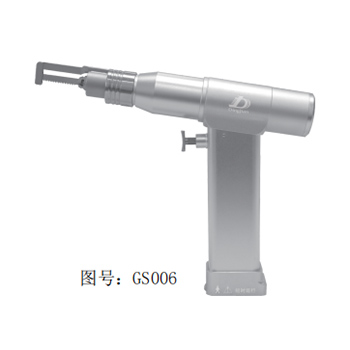
In devastating scenarios involving severe crush injuries, the principles of damage control orthopedics dictate that rapid physiological intervention must be prioritized. The aggressive, linear push-and-pull motion of a specialized saw allows surgeons to execute incredibly fast cuts through thick cortical bone. This immediate structural management is crucial during emergency amputations. Minimizing the patient's time under anesthesia and rapidly halting catastrophic blood loss remain the primary clinical objectives.
Beyond extremity trauma, this specialized equipment plays a profoundly pivotal role in thoracic emergencies. A patient may arrive presenting with cardiac tamponade or massive internal thoracic hemorrhage. Surgical teams must perform an emergency resuscitative thoracotomy immediately. Functioning as a highly efficient Sternal Saw, the device empowers surgeons to bisect the sternum in mere seconds. This rapid intervention grants the trauma team immediate, life-saving access to the heart and great vessels.
Ultimately, the integration of high-speed cutting tools directly translates to a highly streamlined surgical workflow. By significantly reducing the minutes spent laboring manually over dense bone cuts, the surgical team can transition much faster to the most critical phases of the operation. In the unforgiving environment of trauma surgery, saving just five minutes on bone resection can frequently be the deciding factor between a patient's survival and a fatal outcome.
Despite their highly aggressive cutting capabilities, modern medical saws offer remarkable precision. Surgeons utilize pressure-sensitive, variable-speed triggers to adjust the blade's oscillation rate in real-time. This instantaneous control loop is essential when transitioning from cutting the dense outer cortical bone to the softer underlying cancellous bone. By instantly feathering the trigger speed, the surgeon prevents the blade from plunging uncontrollably into delicate soft tissues.
Preventing heat-induced tissue death is an area where precision engineering truly shines. A premium Surgical Saw is meticulously calibrated with a specific stroke length. A precise 14mm stroke is engineered to actively clear bone chips and debris from the cutting kerf. When combined with continuous sterile saline irrigation provided by surgical technologists, this efficient clearing action drastically reduces friction. Consequently, the cutting site remains cool, preserving the cellular integrity of the bone margin.
During high-stress emergency cuts, blade wandering or bending can lead to catastrophic surgical errors. To combat this, advanced medical saws feature heavy-duty locking collets and reinforced blade guidance systems. These mechanisms maintain strict linear stability under heavy lateral loads. This robust directional stability ensures that the saw tracks perfectly along the surgeon's intended cutting plane.
Historically, hospital operating rooms relied heavily on tethered pneumatic surgical tools driven by centralized compressed nitrogen. However, in a multi-casualty scenario where the floor is crowded with personnel and IV poles, eliminating thick pneumatic hoses removes a significant tripping hazard. It also prevents accidental contamination of the sterile field.
Evaluation Metric | Cordless Lithium-Ion Systems | Legacy Pneumatic Systems |
|---|---|---|
Mobility & Setup | Instant deployment; zero tripping hazards in the OR. | Requires hose connections and nitrogen tank verification. |
Power Output | Microprocessor-controlled; fade-free consistent torque. | Reliant on facility air pressure stability. |
Sterilization | Utilizes sterile transfer shields or specialized autoclavable battery housings. | Entire handpiece and hose withstand aggressive steam autoclaving. |
Maintenance Cost | Higher initial battery replacement costs over a 3-year cycle. | Lower long-term consumable costs; highly durable mechanics. |
Modern medical-grade lithium-ion batteries are specifically engineered to withstand rigorous sterilization protocols. Because these intelligent power packs are regulated by internal microprocessors, they ensure the saw will not stall mid-cut. They provide the surgeon with reliable, continuous torque from the first incision until the battery is fully depleted.
Operational efficiency in a bustling trauma center is heavily dependent on the adaptability of its instruments. Modern reciprocating systems excel in this regard due to their highly modular design. They feature tool-less, quick-release locking mechanisms. This intuitive design allows surgical technologists to safely swap out blades in a matter of seconds, completely eliminating the need for supplementary wrenches.
The versatility of the device is further amplified by a vast array of available blade geometries. A surgeon performing an adult femur amputation will select a thick, rigid blade with a low teeth-per-inch count for aggressive material removal. Conversely, if the exact same power unit is utilized later for delicate pediatric trauma, it can be quickly fitted with a thinner blade that delivers a remarkably smooth finish.
This broad clinical utility elevates the device from a mere emergency tool to a highly cost-effective Orthopedic Saw. Once the trauma patient is stabilized, the exact same power handpiece can be utilized in subsequent elective procedures. By serving as a multi-purpose powerhouse, it significantly reduces the need for hospitals to purchase separate cutting tools for every individual surgical discipline.
Trauma reconstructions are rarely brief affairs. Complex procedures can occasionally span several grueling hours, placing immense physical strain on the surgical team. In these demanding environments, the ergonomic design of a surgical power tool is a strict clinical necessity. A well-balanced saw weighing under 1.5 kilograms centers its mass directly over the surgeon's grip. Proper weight distribution ensures the device acts as a natural, effortless extension of the surgeon's arm.
Prolonged occupational exposure to high-frequency oscillation can cause severe neurological issues, known as Hand-Arm Vibration Syndrome. To protect the surgeon's long-term health, advanced medical saws incorporate sophisticated internal dampening mechanisms. Utilizing elastomer mounts and counter-balancing drive shafts, these systems absorb kinetic energy before it reaches the handle.
In the visceral reality of a trauma bay, instruments frequently become heavily coated in blood and saline irrigation. Maintaining a secure grip is paramount for patient safety. Ergonomic saws feature heavily textured, non-slip handles crafted from advanced polymers like PEEK. These tactile enhancements ensure the device remains securely anchored in the surgeon's gloved hand.
For hospital administrators and surgical procurement committees, upgrading an aging inventory requires moving beyond abstract cost analysis and looking at direct engineering specifications. To ensure you are acquiring a high-performance Medical Cutting Tool, evaluate the equipment against these strict clinical standards:
Optimal Oscillation Speed: Look for a no-load speed of up to 14,000 cycles per minute to guarantee rapid bone resection without stalling.
Stroke Length: Ensure a precise 14mm stroke length, which is the engineering sweet spot for clearing bone debris and preventing thermal necrosis.
Sterilization Tolerance: The main handpiece and battery housings must be certified for 135-degree Celsius high-temperature, high-pressure prevacuum autoclaving.
Acoustic Performance: Select models with operating noise levels below 75 decibels to maintain clear communication in the operating room.
Seamless compatibility with existing hospital infrastructure is a critical evaluation metric. The newly acquired handpieces must fit into standard central sterile services department trays. Battery charging stations should be easily accommodated within the operating room's existing electrical prep areas. Proprietary systems that demand entirely new sterilization protocols create severe logistical bottlenecks.
The level of vendor support simply cannot be overstated. In an active level-one trauma center, equipment downtime is entirely unacceptable. Administrators should heavily prioritize reputable medical device manufacturers that offer robust post-sale support. Guaranteed rapid repair turnaround times and the immediate provision of loaner equipment ensure the trauma bay is never left vulnerable.
In the unpredictable, fast-paced world of emergency trauma surgery, having reliable, high-performance equipment is strictly non-negotiable. The modern medical reciprocating saw has proven itself to be an indispensable clinical asset. It offers the critical balance of aggressive cutting speed, exacting precision, and versatile application. Whether it is being utilized to rapidly salvage a crushed limb or to gain immediate access to a hemorrhaging chest cavity, this powerful instrument directly contributes to better patient survival rates. Ready to upgrade your trauma center's capabilities? Explore clinical-grade surgical power tools and find the perfect match for your operating room requirements at https://www.dingjian-medical.com to ensure your surgical team is always prepared for the next emergency.
A reciprocating saw is primarily utilized for heavy-duty, rapid bone resection. In emergency trauma surgery, it is most frequently deployed for life-saving limb amputations, the quick removal of severe unsalvageable bone fractures, and to gain immediate emergency access to the chest cavity through a sternotomy.
While both are vital surgical instruments, their distinct mechanical movements dictate their specific use cases. A reciprocating saw moves the blade back and forth in a linear, push-pull motion, making it exceptionally ideal for fast, deep cuts through thick cortical bone. Conversely, an oscillating saw moves side-to-side in a very small, rapid arc, which is superior for precise, shallow cuts.
While the underlying mechanical push-pull action is functionally similar, a dedicated sternal saw typically features specialized blade guards or highly specific blade configurations. These vital safety mechanisms are engineered to cut through the sternum efficiently while actively preventing the blade from plunging too deep, thereby protecting the heart and lungs.
Medical-grade reciprocating saws are hermetically sealed and manufactured from specialized alloys to withstand the intense high-temperature and high-pressure steam sterilization found in standard hospital autoclaves. Batteries usually follow specialized low-temperature sterilization protocols, or they are safely placed inside sterile transfer shields before entering the operating field.
Historically, pneumatic systems powered by compressed nitrogen hoses were the strict industry standard. Today, most modern trauma bays strongly prefer cordless, battery-powered saws utilizing advanced lithium-ion technology. These battery-operated models are heavily favored for their unencumbered portability and ease of rapid deployment.
Modern lithium-ion batteries are engineered for high-drain surgical environments. A fully charged premium power pack typically provides continuous high-torque output for 30 to 45 minutes of active cutting time. This duration is more than sufficient for completing standard trauma bone resections or amputations without needing a mid-procedure battery swap.
The stroke length for clinical-grade models typically ranges from 10mm to 14mm. A 14mm stroke is widely considered the optimal engineering standard, as it provides enough linear travel to efficiently clear bone debris from the cut while minimizing excessive vibration transferred to the surgeon's hand.


