
In the high-stakes environment of orthopedic surgery, a single millimeter dictates the trajectory of patient recovery. While surgical teams often obsess over the power output of their motorized handpieces, the actual cutting interface frequently receives less scrutiny. The blade is the direct point of contact with osseous tissue. Using incorrect blade dimensions routinely triggers a cascade of avoidable complications, ranging from thermal damage to devastating adjacent tissue trauma. This comprehensive engineering and clinical guide illuminates the critical nuances of choosing the optimal blade length, equipping medical professionals with the knowledge required for safer and more predictable surgical outcomes.
Blade Length Dictates Precision: The physical reach of the cutting instrument governs depth control, ensuring the cut terminates precisely without breaching opposite-side anatomical structures.
Procedure-Specific Sizing: Orthopedic interventions vary wildly. Micro-surgeries of the hand demand distinctly shorter profiles, whereas massive femur reconstructions necessitate robust extended lengths.
Thermal Management is Crucial: The interplay between surface area and cutting speed profoundly impacts heat generation. Optimal sizing minimizes friction and effectively prevents thermal necrosis.
Compatibility Matters: An instrument must interface flawlessly with the surgical handpiece hub. Mismatched connections invite violent vibrations and catastrophic equipment failure mid-procedure.
Quality Equals Safety: Deploying premium sterile components from vetted manufacturers remains a non-negotiable baseline for complex surgical success.
The landscape of orthopedic surgical instruments is undergoing a rapid technological transformation. Recent market analyses reveal a definitive industry shift toward smart, battery-operated brushless systems equipped with intelligent torque feedback. Surgeons and hospital procurement teams are moving away from tethered pneumatic systems to embrace cordless ergonomics, which significantly enhances maneuverability around the sterile field. Furthermore, there is a massive surge in demand for procedure-specific, single-use consumables. This trend is driven by stringent infection control protocols aiming to drastically reduce cross-contamination risks while simultaneously improving operating room turnover times. Hospitals are increasingly prioritizing total cost of ownership, recognizing that investing in premium, application-specific blades reduces surgical delays and mitigates costly post-operative complications.
To appreciate the gravity of blade selection, one must first understand the core instrument. Within the modern operating theater, the Reciprocating Saw stands as an indispensable electromechanical device engineered exclusively for osseous tissue resection. Unlike rugged industrial counterparts, these medical-grade instruments are meticulously balanced. They are hermetically sealed to endure the brutal conditions of repeated autoclaving at 135 degrees Celsius while delivering exact modulated power.
Powered surgical instruments generally utilize distinct mechanical actions. A reciprocating mechanism drives the blade in a rapid linear push-pull trajectory. This aggressive straight-line stroke is uniquely suited for deep plunges or completely traversing thick anatomical structures like a femoral shaft. Modern high-performance units typically operate at a working voltage of 14.4V, delivering an impressive no-load speed of up to 14,000 oscillations per minute while maintaining noise levels below 75 decibels. This precise balance of high torque and low acoustic output is vital for maintaining clear communication in the operating room.
As a primary resection device, this equipment handles a rigorous surgical caseload. Surgeons depend on it for rapid amputations, preparing arthroplasty surfaces during total joint replacements, and excising shattered bone segments in complex trauma reconstructions before fixation plates can be anchored securely.
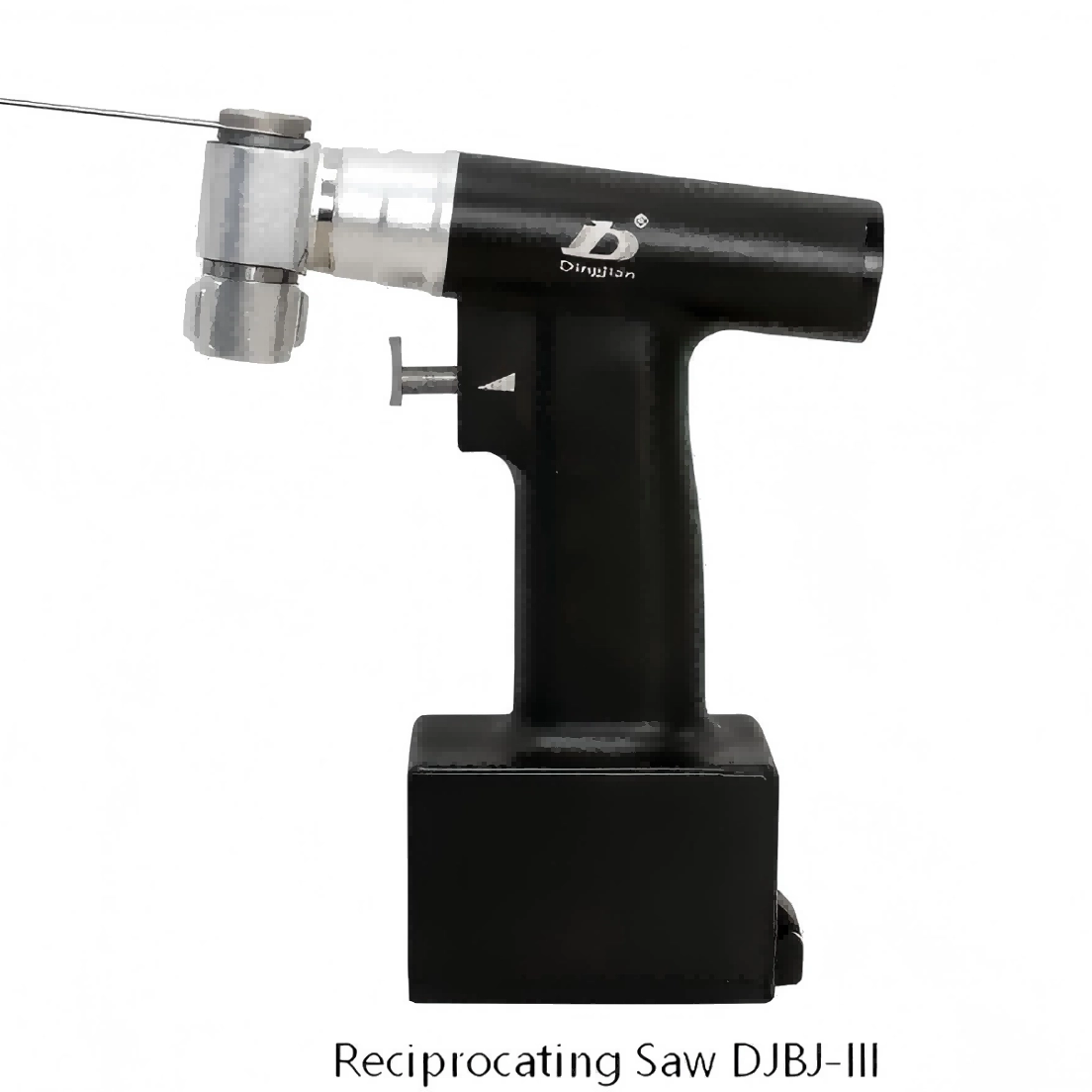
While the motorized handpiece supplies the torque, the blade serves as the critical interface. Consequently, its physical dimensions directly dictate both the safety profile and the ultimate biomechanical success of the intervention.
The foremost biomechanical challenge during bone resection is managing penetration depth. When a surgical team deploys a Bone Saw blade that exceeds the targeted bone diameter, the excess steel protrudes violently beyond the far cortex. This over-penetration creates a severe hazard. It can inadvertently sever hidden nerves, lacerate major vascular bundles, or macerate surrounding muscle tissue. Imagine a high-stress trauma case where a femur requires immediate sectioning; a blade extending even five millimeters too far can compromise the sciatic nerve.
Conversely, a blade that is too short will fail to breach the opposite cortex in a single fluid pass. Surgeons are then forced to awkwardly pivot the handpiece or apply dangerous downward force. Such mechanical workarounds routinely yield fragmented bone margins and unnecessarily prolong the time a patient spends under anesthesia. Therefore, the reach must always be calibrated alongside the specific stroke length of the handpiece—typically around 14mm for major orthopedic tools—to establish the true maximum cutting depth.
Building on this mechanical foundation, carefully sized instruments empower the operator to maintain an unobstructed line of sight. When the blade closely mirrors the cross-section of the bone, the aggressive cutting action remains strictly confined to the hard tissue. This localized focus drastically reduces the displacement of adjacent soft tissues, minimizing the need for heavy bruising retractors. Ultimately, this careful approach mitigates post-operative edema and accelerates patient rehabilitation.
Procuring the right instrument is never a universal endeavor. Hospital inventory managers must stock a diverse portfolio of lengths to address vastly different anatomical landscapes. To streamline the selection process, the following matrix outlines the optimal configurations for standard orthopedic interventions.
Anatomical Target | Recommended Length | Optimal Tooth Pitch | Primary Clinical Application |
|---|---|---|---|
Phalanges / Metacarpals | 15mm - 30mm | Fine High TPI | Hand and foot osteotomies, delicate fusions |
Radius / Ulna / Fibula | 30mm - 50mm | Medium TPI | Mid-shaft fracture resections, corrective osteotomies |
Femur / Tibia / Pelvis | 50mm - 90mm+ | Coarse Low TPI | Major trauma amputations, total joint arthroplasty |
Sternum / Revisions | Variable Guarded | Specialty Profile | Cardiothoracic access, implant removal |
Procedures navigating the extremities demand extreme finesse. The skeletal structures of the hands and feet are delicate, tightly packed, and interwoven with a complex web of tendons. Highly responsive micro-blades are deployed for metacarpal fixations and podiatric osteotomies. Their abbreviated profile ensures the sharp tip never plunges into the fragile soft tissues on the opposing side of the digit.
Major trauma reconstructions involve the densest and most unforgiving bones in the human body. These grueling procedures necessitate heavy-duty instruments capable of enduring massive mechanical loads without deflecting. Extended blades are mandatory for diaphyseal femur fractures and high tibial osteotomies. The instrument must completely traverse the thick cortical shell in one continuous motion to guarantee a perfectly flat plateau for implant seating.
Beyond mere length, several metallurgical and geometric variables must be scrutinized to unlock the full potential of the cutting system.
The raw alloy dictates the clinical reliability of the instrument. Top-tier blades are forged from hardened surgical-grade stainless steel, predominantly 316L or 400-series alloys. These advanced materials boast immense tensile strength and total resistance to corrosive steam sterilization. Rigidity is paramount. A long 90mm blade requires a significantly thicker cross-section. If a long blade is manufactured too thin, it will visibly bend during high-speed operation. This deflection results in skewed trajectories, uneven bone cuts, and a terrifying risk of the metal snapping mid-procedure.
The base of the blade serves as the anchor to the handpiece. Medical device manufacturers employ highly proprietary locking mechanisms. It is a strict clinical necessity that the hub aligns flawlessly with the specific brand of the handpiece. A loose or improper fit instantly translates to violent micro-vibrations, deafening operating room noise, and a total loss of tactile feedback for the operating surgeon. Therefore, verifying compatibility with your specific Orthopedic Saw is a mandatory pre-operative step.
To achieve seamless surgical efficacy, the physical dimensions of the blade must be perfectly synchronized with the mechanical output of the handpiece.
The velocity of a reciprocating instrument is tracked in cycles per minute. Cutting efficiency is a product of this frequency multiplied by the stroke length, which is the actual linear distance the blade travels. For instance, if a surgeon mounts a massive 90mm blade onto a handpiece with a minuscule stroke length, the teeth situated in the center of the blade will fail to clear the bone channel. This traps dense bone paste within the cut, skyrocketing friction and grinding the cutting speed to a halt. Properly matching a standard 14mm stroke length with a 14,000 cycle per minute output ensures bone chips are violently evacuated from the surgical site.
Regardless of how flawlessly the blade is sized, cutting dense cortical bone inherently generates heat. Biomechanical analyses reveal a direct correlation between blade geometry, operational speed, and kinetic friction. Exposing osseous tissue to temperatures exceeding 47 degrees Celsius for mere sixty seconds triggers thermal necrosis, which is the irreversible death of bone cells. Necrotic bone cannot integrate with titanium plates or biological grafts. To actively neutralize this threat, strict surgical protocols demand continuous heavy saline irrigation directly onto the cutting interface.
Introducing high-powered motorized instruments into a delicate surgical field demands rigorous adherence to established safety protocols and engineering best practices.
The debate between reusable versus disposable blades has firmly concluded in modern orthopedics. Contemporary standards unequivocally dictate the use of single-use pre-sterilized blades. Reusing a blade is fraught with hidden dangers. Microscopic blunting of the teeth drastically increases heat generation, while invisible stress fractures in the steel elevate the risk of the blade shattering in the wound. Moreover, single-use instruments completely eradicate the risk of cross-contamination.
Before the blade ever touches the patient, the surgical team must execute a mandatory safety check. The scrub technician firmly seats the blade into the hub of the Fracture Repair Tool, listening for the definitive metallic click of the locking collar. Once secured, the surgeon briefly powers the handpiece in a safe direction. This dry run confirms battery life, verifies blade retention, and checks for any abnormal acoustic whining that might signal a failing internal bearing.
Surprisingly, blade length heavily influences surgical ergonomics. When an appropriately sized factory-sharp blade is deployed, the motorized action performs the heavy lifting. The surgeon merely guides the trajectory with steady light pressure. Struggling with a short or dull blade forces the operator to bear down with intense physical force. This invites dangerous slips and accelerates surgeon fatigue, severely compromising precision during a grueling four-hour reconstruction.
In the tightly regulated sphere of medical devices, the provenance of your instruments is just as vital as the surgeon wielding them. Procurement committees must look far beyond the initial price tag.
A trustworthy manufacturer will hold unimpeachable ISO 13485 certifications, validating their quality management systems. Their raw materials must be entirely traceable. Look for partners who utilize advanced multi-axis CNC machining to mill their blades rather than cheap stamping methods. CNC machining guarantees precise tooth set and gullet depth, which are essential for smooth heat-free cuts.
The upfront purchase order for surgical equipment represents a mere fraction of its total cost of ownership. Procurement teams must calculate the hidden long-term financial impacts. A substandard blade that vibrates violently, cuts poorly, or requires mid-procedure swapping actively burns expensive operating room time. With operating room minutes costing hospitals upwards of a hundred dollars each, a cheap blade that delays a surgery by ten minutes results in a massive net financial loss. Investing in premium perfectly sized instruments minimizes clinical risks and fundamentally protects the hospital bottom line.
The motorized resection handpiece remains an absolute cornerstone of orthopedic trauma surgery, yet its true potential is only unlocked when paired with the correct blade length. Matching the physical dimensions of the cutting accessory to the specific anatomical target ensures surgical precision, drastically minimizes adjacent tissue trauma, and heavily promotes rapid uncomplicated patient healing. Moving forward, hospital procurement teams and surgical staff must routinely audit their inventory, ensuring they have immediate access to a comprehensive high-quality array of blade lengths to meet the unpredictable demands of the modern operating room. For medical facilities looking to upgrade their surgical toolkit with reliable, precision-engineered equipment, exploring the advanced Surgical Saw solutions from Dingjian Medical ensures both optimal clinical outcomes and exceptional operational efficiency.
There is no universal standard blade length, as the correct size is entirely dictated by the anatomical site and the specific surgical objective. For delicate small bone procedures, micro-blades ranging from 15mm to 30mm are utilized to prevent soft tissue damage. In contrast, major large bone trauma requires robust blades ranging from 50mm to 90mm to completely traverse the dense cortical bone in a single stroke.
Modern orthopedic best practices and stringent infection control guidelines strongly recommend against reusing saw blades. Today's standard of care mandates single-use disposable blades. Reusing a blade introduces severe risks: the microscopic teeth become blunted, which exponentially increases friction and the risk of thermal necrosis. Furthermore, the microscopic crevices in the teeth can harbor resilient bioburden, increasing the risk of surgical site infections.
The core difference lies in their mechanical kinematics. A reciprocating mechanism drives the blade rapidly back and forth in a straight linear push-pull motion. This aggressive action is ideal for deep plunging cuts and completely sectioning thick long bones. Conversely, an oscillating mechanism vibrates rapidly side-to-side in a tight arc. This pendulum-like motion is specifically engineered for precise shallow surface cuts where the surgeon must strictly limit the depth of penetration.
Living bone tissue is exceptionally vulnerable to thermal damage. When a metal blade cuts through mineralized bone at high speeds, it generates intense kinetic friction. If the localized bone temperature exceeds 47 degrees Celsius for more than sixty seconds, it triggers thermal necrosis, the irreversible death of bone cells. This cellular death severely compromises the body's ability to heal the fracture. Continuous chilled saline irrigation is mandatory to keep the site cool.
Compatibility is determined entirely by the proprietary design of the blade hub, which is the base that locks into the handpiece. Because medical device manufacturers use unique patented locking mechanisms, blades are rarely universally interchangeable. Using a poorly fitting blade will cause violent vibrations and inaccurate cuts. Always consult your equipment technical manual and work with certified suppliers to ensure exact hub compatibility.
Proper sterilization requires strictly following the manufacturer guidelines. Typically, the battery pack must be removed and sterilized separately using low-temperature plasma or specific protocols, as high heat destroys battery cells. The main motorized handpiece and attachments are usually designed to withstand high-temperature, high-pressure steam sterilization in a standard autoclave at 135 degrees Celsius. All components must be thoroughly cleaned of biological debris prior to entering the autoclave to ensure complete sterility.
Blade binding during dense bone resection is typically caused by a combination of improper technique and equipment mismatch. If the blade is too short or the handpiece stroke length is inadequate, bone debris cannot clear the cutting channel, creating a dense paste that halts the blade. Additionally, using a dull blade forces the surgeon to apply excessive downward pressure, which twists the blade in the channel and causes immediate mechanical jamming. Ensuring a sharp blade of the correct length with continuous irrigation prevents this issue.


