
Most people immediately associate reciprocating saws with heavy-duty construction, demolition, and carpentry. However, highly specialized versions of these tools are actually indispensable, lifesaving instruments found in operating rooms worldwide. The transition from a rugged construction site tool to a precision medical instrument requires a fundamental shift in design, engineering, and material science.
At its core, the basic mechanics rely on a linear push-and-pull cutting motion. This specific mechanical action is exceptionally ideal for cutting through dense, hard, and unforgiving materials like human bone. A medical-grade saw must achieve this without causing unnecessary trauma to the surrounding delicate tissues, nerves, and blood vessels.
This comprehensive clinical guide explores exactly what these devices do behind the closed doors of an operating theater. We will examine their highly specialized forms and detail the critical applications across various surgical disciplines. Furthermore, we will highlight what makes these medical-grade instruments fundamentally different from standard hardware tools.
Precision Bone Cutting: In the surgical field, this instrument is primarily utilized for cutting bone with extreme, microscopic precision. This ensures minimal thermal or physical damage to surrounding soft tissues.
Specialized Variations: The two most critical medical forms are the orthopedic variant and the sternal variant. Orthopedic models handle complex joint replacements, while sternal designs safely open the chest cavity for open-heart surgery.
Medical-Grade Design: Unlike standard construction tools, clinical models are manufactured from fully autoclavable materials. They feature advanced vibration-reducing ergonomics and utilize specialized, single-use surgical blades.
Power Sources: To maintain a sterile field, these units are typically powered by heavy-duty medical lithium-ion batteries or pneumatic compressed air systems.
The fundamental operating principle is its linear push-and-pull motion. Driven by a high-torque internal motor, the blade rapidly extends and retracts in a straight line. In a surgical setting, this reciprocating motion allows surgeons to make straight, deep, and highly controlled cuts in dense bone structures. Picture a surgeon needing to bypass delicate neurovascular bundles. The straight-line action prevents the lateral trauma typically caused by spinning circular blades. Unlike oscillating tools that require significant surface clearance, the linear stroke allows it to operate in tight anatomical spaces. This makes it ideal for accessing deep osseous structures without compromising the surrounding muscle networks.
A medical-grade cutting tool is a marvel of biomedical engineering. It consists of several critical components meticulously designed for clinical efficacy. The core elements include the handpiece, the internal power drive, the blade locking mechanism, and the specialized cutting blades.
The handpiece is typically constructed from anodized aluminum or surgical-grade stainless steel. This rugged build easily withstands harsh sterilization environments. Concurrently, the blade locking mechanism is engineered for tool-free, rapid changes. Scrub nurses can swap attachments in mere seconds. Furthermore, the overall design heavily focuses on weight balance. Surgeons often perform procedures lasting several hours. Consequently, a perfectly balanced tool is crucial to prevent hand fatigue, reduce micro-tremors, and maintain absolute cutting accuracy.
One of the most frequent clinical applications occurs during total joint replacement surgeries, particularly knee and hip procedures. During a knee replacement, the surgical team must remove the damaged cartilage and a small amount of underlying bone to create a precise geometric surface. An Orthopedic Saw is utilized to shape the distal ends of the femur and the proximal tibia. The accuracy of these cuts is paramount. Artificial joint implants must fit perfectly flush against the cut bone. This precise fit ensures long-term stability, promotes proper bone ingrowth, and restores the patient natural range of motion.
In emergency trauma cases, time and precision dictate patient survival. Imagine a busy trauma bay where a severely crushed limb requires immediate, life-saving intervention. Surgeons utilize these powerful tools to quickly and cleanly sever irreparable bone tissue. A clean cut is essential in amputations to ensure that the remaining bone stump is smooth and viable for future prosthetic fitting. The aggressive yet controlled linear strokes allow the surgical team to efficiently cut through thick long bones. This significantly minimizes the time the patient spends under general anesthesia.
Corrective osteotomy is a complex procedure where a bone is intentionally cut to shorten, lengthen, or change its structural alignment. This is often performed to correct severe skeletal deformities, alleviate osteoarthritis pain, or repair complex malunions from previous fractures. In these highly delicate operations, surgeons rely on linear cutting action to execute precise, pre-planned geometric modifications. The straight stroke ensures the operator can follow exact cutting guides without deviating into adjacent healthy bone mass.
A median sternotomy is the primary surgical incision used in cardiothoracic surgery to gain full access to the heart, lungs, and surrounding major blood vessels. The procedure involves making a vertical incision down the center of the chest and splitting the breastbone completely in half. This approach remains the gold standard for coronary artery bypass grafting, heart valve replacements, and complex heart transplant surgeries.
To perform this critical incision safely, surgeons employ a specialized Sternotomy Saw. The most defining feature of this instrument is its unique blade guard, commonly referred to as a footplate. As the surgeon guides the device upward along the sternum, the footplate slides smoothly beneath the bone. This physical barrier separates the sharp, reciprocating teeth from the vital organs resting just millimeters below. It perfectly protects the myocardium and aorta from accidental laceration. Unwavering speed, consistent torque, and absolute mechanical reliability are non-negotiable during this life-saving step.
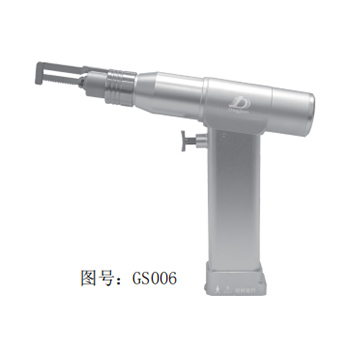
While they share a mechanical name, clinical models and hardware store saws exist in entirely different engineering universes. The operating room demands strict adherence to safety, hygiene, and microscopic precision.
The most profound difference lies in sterilization capabilities. Surgical instruments must routinely withstand extreme heat, typically up to 135 degrees Celsius, alongside high pressure and intense moisture inside a hospital autoclave. A standard construction tool would melt, short-circuit, or rapidly rust under these extreme conditions. In contrast, medical units are manufactured using high-grade anodized aluminum, passivated stainless steel, and advanced heat-resistant polymers.
A construction tool is designed for aggressive, rapid material demolition, resulting in a tearing, jagged cut. Conversely, a Surgical Saw is engineered for tissue preservation. The blades feature a much higher tooth count, an ultra-narrow kerf width, and are stamped from specialized surgical steel. This ensures the calcium matrix of the bone is sliced cleanly rather than shattered. Clean cuts prevent microscopic fractures that could delay patient healing.
Operating rooms are highly fluid environments. To combat this, clinical power tools are hermetically sealed. This strict ingress protection protocol ensures that blood, saline irrigation, and other bodily fluids absolutely cannot penetrate the motor housing. Without this sealing, the internal mechanics would fail. Worse yet, unsealed tools create a breeding ground for dangerous pathogens leading to cross-contamination.
Feature | Surgical Reciprocating Saw | Standard Construction Saw |
|---|---|---|
Material Build | Anodized aluminum, surgical stainless steel, PEEK | Standard plastics, cast metals, basic steel |
Sterilization | Fully Autoclavable up to 135 degrees Celsius | Cannot be sterilized; will melt or rust instantly |
Blade Design | Fine-tooth, narrow kerf, single-use sterile | Coarse-tooth, wide kerf, reusable |
Primary Goal | Microscopic precision, cellular tissue preservation | Aggressive material removal, demolition speed |
Vibration | Highly dampened to prevent surgeon hand fatigue | Moderate to high vibration, causes rapid fatigue |
The reliability of the power source is critical. Surgeons simply cannot afford a sudden loss of torque mid-cut while resecting a femur.
Historically, pneumatic systems powered by compressed medical nitrogen have been the gold standard. They are incredibly powerful and highly durable due to fewer moving electronic parts. They also carry absolutely zero risk of electrical shock. However, the primary drawback is the necessity of heavy, pressurized air hoses connecting the tool to a wall unit. These hoses can clutter the sterile field, limit the surgeon mobility, and create tripping hazards.
Modern surgical suites are rapidly shifting toward cordless technology. These advanced units are powered by specialized, autoclavable lithium-ion batteries encased in aseptic transfer shields. Operating at optimized medical voltages like 14.4V, these batteries provide consistent torque and long-lasting capacity sufficient for extensive, multi-hour procedures. The elimination of cords grants the operator complete, unencumbered freedom of movement around the operating table.
While less common for heavy orthopedic bone cutting, corded electric options are still utilized in specific, console-based surgical setups. These are often integrated into larger surgical towers. They are typically reserved for specialized, minimally invasive procedures requiring continuous, uninterrupted low-voltage power without the bulk of a battery pack.
Looking at the current landscape of surgical power tools, the medical device industry is experiencing a massive paradigm shift. Driven by an aging global population and a subsequent spike in joint replacement procedures, hospitals are demanding more intelligent, ergonomic equipment. Recent market trends highlight a rapid migration from traditional pneumatic systems to advanced brushless DC motor technology.
Why is this transition happening? Brushless motors generate significantly less heat, offer superior torque control, and drastically extend the operational lifespan of the tool. Additionally, the integration of smart sensors within the handpieces is becoming mainstream. These micro-sensors monitor blade friction and motor load in real-time. By providing immediate mechanical feedback, they actively help surgeons prevent thermal necrosis and ensure the maximum preservation of healthy bone stock. The industry focus has firmly shifted from raw cutting power to data-driven precision and enhanced patient safety.
For medical procurement officers and hospital administrators, selecting the right surgical power tools is a major capital investment. Several key engineering features dictate the clinical value and longevity of the instrument.
Surgeons require precise control over the cutting speed. High-quality models feature highly responsive variable speed triggers that instantly adjust the cycles per minute. A premium Reciprocating Saw typically delivers a no-load speed of up to 14,000 CPM combined with a precise stroke length of approximately 14mm. Different bone densities, such as the hard cortical exterior versus the softer cancellous interior, require dynamic cutting speeds to prevent splintering and ensure a flawless margin.
Time is a precious commodity when a patient is under anesthesia. Scrub nurses must be able to change dull blades in seconds without fumbling with external wrenches or chuck keys. Quick-release, tool-free locking mechanisms are a mandatory feature for maintaining surgical rhythm and efficiency.
A heavy, poorly balanced instrument causes rapid forearm fatigue. This fatigue can lead to dangerous micro-tremors and decreased surgical accuracy. Premium ergonomic designs ensure the center of gravity rests comfortably in the surgeon palm. Internal counterbalances are often utilized to dampen mechanical vibration, improving control and ultimately leading to better patient outcomes.
Hospitals rarely purchase standalone tools; they invest in comprehensive workflows. It is highly advantageous to procure a unified ecosystem. Reputable manufacturers design their systems so that batteries, chargers, and modular attachments are universally interchangeable across their entire line of surgical drills and saws. This universal compatibility drastically reduces overall procurement overhead and simplifies sterile processing.
The lifecycle of clinical equipment involves rigorous, uncompromising maintenance. Post-surgery, the tool undergoes a strict decontamination process. It is immediately wiped down in the operating room, then transported to sterile processing where it is enzymatically washed and manually scrubbed to remove microscopic bio-debris. Moving parts are carefully lubricated with medical-grade, steam-permeable oils. Finally, the unit is placed into an autoclave for high-pressure steam sterilization. Adhering strictly to the manufacturer instructions is critical to preventing seal degradation.
A significant, hidden risk during bone modification is thermal necrosis. This is the localized death of bone tissue caused by excessive friction heat generated by the blade. If the bone tissue dies, the artificial implant will fail to integrate, leading to catastrophic surgical failure. To combat this, surgeons utilize ultra-sharp, single-use blades. More importantly, surgical assistants continuously apply sterile saline irrigation directly to the blade-bone interface. This fluid acts as a crucial coolant, keeping temperatures well below the 47 degrees Celsius threshold of tissue damage while actively flushing away bone debris for enhanced visibility.
The reciprocating saw is an undeniably vital tool in modern medicine. It has perfectly adapted from its rugged industrial roots to perform delicate, life-saving tasks. Whether executing precise geometric cuts in orthopedics or safely opening the chest cavity in cardiothoracic surgery, the mechanical reliability of these devices is paramount.
The quality, precision, and ergonomic design of the instrument directly impact surgeon fatigue, operative time, and ultimately, patient recovery. Investing in top-tier equipment is not just a matter of convenience; it is an absolute clinical necessity.
For medical procurement officers, clinic managers, and surgical department heads looking to upgrade their operating rooms, exploring high-quality, reliable surgical power tools is the next logical step. We highly recommend visiting Dingjian Medical to discover comprehensive, interchangeable systems specifically designed to meet the rigorous, high-stakes demands of modern surgical environments.
No, absolutely not, unless it is a dire, non-clinical survival situation far outside of a medical facility. Standard construction tools cannot be sterilized, running an extreme risk of causing massive, life-threatening infections. Furthermore, they lack the fine precision required for medical procedures, which would cause severe, irreversible tissue tearing and bone shattering.
An oscillating saw blade moves rapidly side-to-side in a small, tight arc, making it highly effective for flat, shallow, and precise surface cuts. Conversely, a reciprocating blade moves back and forth in a straight linear push-and-pull motion. This makes it the ideal choice for deep, straight cuts and completely splitting thick, dense bone structures.
Generally, no. To ensure maximum cutting sharpness, minimize friction heat, and absolutely prevent cross-contamination between patients, the vast majority of surgical blades are manufactured as single-use, sterile disposables. Reusing blades severely increases the risk of thermal necrosis and hospital-acquired infections.
Most medical-grade models operate at incredibly high speeds, typically ranging between 10,000 to 14,000 cycles per minute. This rapid, consistent speed allows for exceptionally smooth, efficient cuts through dense calcium matrices without snagging, stalling, or causing micro-fractures in the surrounding skeletal structure.
Sterilizing a battery-powered unit requires a specific protocol to protect sensitive electronics. The handpiece itself is hermetically sealed and fully autoclavable at standard high temperatures. However, the lithium-ion batteries are typically placed inside a sterile transfer shield or specialized aseptic housing before use, as the raw battery cells often cannot withstand the extreme heat and moisture of an autoclave directly.
A stall usually occurs due to excessive forward pressure applied by the operator or a depleted power source. If a surgeon pushes the blade too aggressively into dense cortical bone without letting the high-speed motor do the work, the friction overcomes the torque. Utilizing modern tools equipped with advanced brushless motors significantly reduces the likelihood of mid-procedure stalling by providing consistent, adaptive power.


