
Torn between two distinct cutting mechanisms? Picking the wrong tool will ruin your materials and waste precious time on the job. Both devices are engineered to slice through physical barriers efficiently. However, their internal mechanics, blade movements, and ideal use cases are entirely different. I have seen countless workpieces destroyed simply because the operator chose brute force over precision.
The reciprocating mechanism is universally recognized for its raw power and aggressive tearing action. It completely dominates demolition environments. Conversely, the oscillating multi-tool is celebrated for its unmatched accuracy and ability to operate flawlessly in highly confined spaces. These mechanical principles are so reliable that they have transcended standard construction. Today, top-tier medical facilities rely heavily on these exact motions for critical procedures. This comprehensive guide breaks down the core differences from an engineering perspective, providing objective insights to help you make the perfect purchasing decision.
Motion Difference: A reciprocating mechanism utilizes a powerful push-and-pull linear stroke. An oscillating device relies on rapid, side-to-side micro-vibrations to slice through materials.
Primary Use Cases: Linear stroke variants are the undeniable champions of heavy-duty demolition and rough cuts. Micro-vibration tools excel at precision plunge cuts and navigating tight corners.
Medical Applications: Both mechanisms have been adapted into the operating room. A medical-grade linear saw is frequently used in major joint replacements. Meanwhile, a micro-vibrating instrument is utilized for precise bone cutting that minimizes surrounding tissue damage.
Safety and Precision: High-frequency vibrating instruments offer a higher degree of safety and extreme precision for detail work. Heavy-duty linear saws require a firm two-handed grip to manage their raw torque and potential for violent kickback.
Before diving into the specific mechanical comparisons, we must examine the current industry trends shaping these categories. Recent market analysis reveals a massive shift toward cordless, brushless motor technologies. Manufacturers are heavily investing in advanced vibration-dampening systems and extended high-capacity batteries. Consequently, heavy-duty models are becoming lighter and slightly more ergonomic.
More importantly, the demand for extreme precision has pushed these technologies into the healthcare sector. Engineers are now focusing on jitter-free operation and low-noise outputs. Despite these modern advancements blurring the lines of convenience, the core mechanical divides between tearing and vibrating remain steadfast.
To truly understand the applications of this heavy-duty power tool, we must first examine its underlying mechanics. The internal motor converts rotary motion into a brutal, linear stroke. It drives the blade back and forth at incredibly high speeds, typically measured in strokes per minute. Because the stroke length usually ranges from three-quarters of an inch to over one inch, the teeth of the blade physically tear through thick, dense materials rapidly.
Picture this scenario. You are tearing down a water-damaged drywall section. Hidden screws and hardened framing nails lurk behind the studs. This is exactly where the tool shines. Designed for rigorous physical tasks, the unit features a rifle-like, two-handed build. The operator holds a primary trigger handle at the rear while stabilizing the front shoe with their non-dominant hand. This robust build is absolutely necessary to absorb the heavy vibration and torque generated during intense demolition.
From an engineering standpoint, the versatility of this instrument is dictated by its extensive range of interchangeable blades. Professionals select attachments based on the immediate obstacle. Wood-cutting blades feature deep, aggressive teeth designed for fast material removal. Metal-cutting blades utilize finer, closely spaced teeth to slice through copper pipes and embedded fasteners without snagging. Ultimately, its primary strength lies in rapid destruction where a clean finish is completely irrelevant.
While the former focuses on brute force, an Oscillating Saw operates on a completely different mechanical paradigm. Instead of a long push-pull stroke, this compact device utilizes rapid side-to-side movement. The blade moves in a tiny arc, usually between 2.5 and 3.2 degrees. These motors operate at astonishing speeds of up to 20,000 oscillations per minute.
Imagine fitting a new laminate floor in a cramped hallway. You need to undercut a wooden door jamb perfectly flush with the subfloor. A bulky demolition tool simply will not fit. The slender, cylindrical, one-handed profile allows the operator to maneuver into extremely tight corners and awkward angles.
The true value of this device stems from its vast array of modular attachments. Straight plunge-cut blades are ideal for diving directly into drywall without drilling a pilot hole. Sanding pads instantly transform the cutter into a detail sander. Because it vibrates at high frequencies rather than tearing, it produces significantly less airborne debris and leaves a remarkably clean, smooth edge.
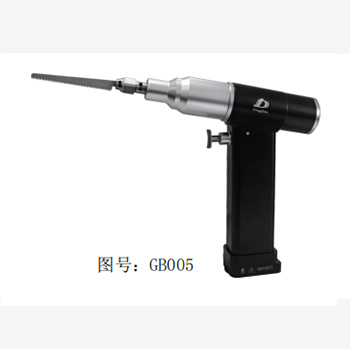
Understanding the exact specifications and behavioral differences between these tools is crucial for proper selection. Below is a direct comparison of their primary engineering traits.
Feature | Reciprocating Mechanism | Oscillating Mechanism |
|---|---|---|
Motion Type | Linear push-and-pull stroke | Side-to-side micro-vibration |
Cutting Speed | Extremely fast material removal | Slower, highly controlled progress |
Precision Level | Very low; causes splintering | Surgical accuracy; clean flush edges |
Safety Profile | High kickback risk; requires two hands | Very safe; bounces off elastic surfaces |
Primary Use | Heavy demolition and rough framing | Detail work and confined spaces |
The mechanical principles that make these tools so effective on a construction site have been meticulously refined and adapted for highly critical environments. In the operating room, cutting efficiency must be perfectly balanced with patient safety. Medical instruments are manufactured from corrosion-resistant stainless steel. They feature sealed internal components to withstand extreme high-pressure autoclave sterilization.
In the realm of joint replacement, a specialized Orthopedic Saw is frequently utilized for heavy bone resection. Surgeons rely on the powerful linear motion of this medical-grade device during procedures like total knee arthroplasty. When a surgeon needs to remove the damaged ends of a femur, the aggressive action provides the necessary torque to cut through dense cortical bone.
Modern engineering has vastly improved these clinical devices. For instance, a premium Medical Cutting Tool now features jitter-free operation and high-frequency strokes reaching up to 14,000 times per minute. This specific high-speed, low-vibration engineering prevents thermal necrosis, ensuring healthy surrounding tissue is not damaged by excessive friction heat. Furthermore, the noise levels are strictly controlled to maintain a calm, focused surgical environment.
Similarly, the micro-vibration mechanism is perfectly suited for delicate medical procedures. An oscillating Surgical Saw offers an unparalleled safety profile. Because rigid bone cannot move, the vibrating blade slices through it cleanly. However, if the blade accidentally contacts soft tissues like skin or delicate blood vessels, the flexible tissue simply vibrates back and forth with the blade rather than tearing. This unique physical property makes it invaluable for precision spinal surgeries and safe cast removal.
To facilitate an objective equipment decision, we must weigh the specific advantages and mechanical limitations of each design.
Linear Stroke Advantages:
Unmatched cutting speed rapidly removes material, significantly reducing demolition time on heavy job sites.
Extreme versatility allows it to tackle wood, metal, masonry, and plastic simply by swapping the attachment.
High-torque motors power through thick, dense materials that would instantly stall smaller tools.
Linear Stroke Limitations:
Offers zero precision. The aggressive stroke causes severe material splintering and collateral damage.
The heavy weight and intense vibration cause rapid user fatigue and hand strain during prolonged use.
Highly prone to violent kickbacks if the blade binds improperly in the workpiece.
Micro-Vibration Advantages:
Delivers extreme accuracy for clean, precise, flush cuts without damaging adjacent surfaces.
Highly multi-functional. It acts as a cutter, sander, scraper, and grout remover in one compact body.
Fits effortlessly into impossibly tight spaces where no other motorized equipment can operate.
Micro-Vibration Limitations:
Incredibly inefficient for cutting thick lumber or heavy metals. It will take a long time and likely burn the material.
High-quality attachments wear out quickly and are often costly to replace.
Completely lacks the torque and stroke length required for heavy-duty tear-downs.
Choosing the proper equipment depends entirely on the specific demands of the project at hand. Matching the correct motor mechanism to your material ensures both efficiency and safety.
Deploy a Reciprocating Saw if your primary goal is destruction. If you are tearing down an old wooden deck, removing framed drywall, or cutting thick metal plumbing pipes, this is your tool. It is the ultimate instrument for brute force and rapid dismantling.
Deploy an oscillating device if your primary goal is finesse and preservation. If you are doing detailed finish carpentry, installing delicate flooring, or cutting precise holes for electrical boxes, the micro-vibrating tool is the superior choice.
In the context of healthcare, choosing between these mechanisms depends entirely on the surgical objective. A linear orthopedic instrument is the standard for bulk bone removal where speed and deep cutting power are required. Conversely, a vibrating surgical instrument is the tool of choice when making precise, tissue-sparing cuts where soft tissue preservation is the highest priority.
The debate between these two powerful technologies is not about which tool is universally better. It is entirely about which mechanism is appropriate for the task at hand. One offers raw, unbridled power for rapid material removal, while the other provides surgical precision for detailed finishing tasks.
These two mechanisms actually complement each other perfectly. A well-rounded equipment kit, whether sitting in a contractor's truck or arranged on a sterile surgical tray, often contains both. If you are outfitting a medical facility and require state-of-the-art, autoclavable, and jitter-free cutting instruments, visit Dingjian Medical to explore equipment engineered for absolute precision and patient safety.
While it is technically capable of cutting wood, a vibrating blade is not designed for thick lumber. The tiny motion makes progress incredibly slow. Attempting to force a fine blade through a thick post will likely burn the wood, overheat the motor, and permanently ruin the expensive attachment. A heavy-duty linear stroke tool is the correct and much safer choice for thick wood.
Absolutely not. While they share the exact same underlying mechanical principles, a specialized clinical device is vastly different. It is built entirely with surgical-grade stainless steel. It is completely sealable to endure high-pressure autoclave sterilization. Furthermore, it operates with extreme precision and advanced vibration dampening to ensure absolute patient safety during delicate operations.
The safety profile comes down to physics. The tiny, rapid vibratory movements easily slice through rigid materials like wood or bone. However, when the blade contacts an elastic surface like human skin, the skin simply vibrates back and forth with the teeth. Because there is no long stroke to tear the tissue, it drastically reduces the risk of severe accidental lacerations.
Brushless motors eliminate the physical carbon brushes found in older designs, reducing internal friction and heat generation. This results in significantly longer battery life, higher torque delivery, and a longer overall lifespan for the tool. In both construction and medical fields, this means more consistent power under heavy loads without the risk of the motor burning out prematurely.
Generally, no. The aggressive push-pull motion causes the unit to vibrate heavily and tear through fibers rather than slice them cleanly. This violent action splinters wood, shatters plastics, and makes it nearly impossible to follow a perfectly straight line or achieve a flush finish. Precision work always requires a high-frequency vibrating multi-tool.


