
The transition from traditional freehand drilling to guided precision marks a major evolution in modern orthopedic trauma surgery. Operating rooms now demand instrumentation capable of delivering deterministic, flawless trajectories every single time. Misaligned hardware often leads to revision surgeries. These errors significantly increase operating room time. They also severely compromise patient recovery outcomes. Relying purely on surgeon proprioception introduces dangerous variability. This makes accurate hardware placement highly challenging in complex anatomical zones.
To solve these critical issues, the Hollow Drill (also known as a cannulated drill) emerges as a standard instrument. It ensures exact drill paths via pre-placed guide wires. You will learn an evidence-based framework for evaluating these advanced systems. We will explore how to select and implement them effectively. This guide optimizes high-volume surgical workflows and enhances clinical predictability.
Hollow drills enable precise over-the-wire drilling, reducing tissue damage and eliminating drill-bit slippage in complex fracture fixations.
Selecting the right hollow drill bit requires balancing cutting efficiency (flute design) with thermal management to prevent bone necrosis.
Operational ROI is driven by coupling compatibility (e.g., Hex, AO) and the durability of the drill bits through repeated sterilization cycles.
The primary implementation risk involves cannula sterilization; procurement must align with sterile processing department (SPD) capabilities.
Traditional solid drills rely heavily on surgeon proprioception. They require intense manual control. Operating in tight anatomical spaces increases the risk of breaching the cortical wall. Plunging past the far cortex damages surrounding soft tissues. Surgeons often struggle to maintain a perfect angle. A minor deviation at the entry point magnifies into a significant error deep within the bone. This baseline challenge demands multiple fluoroscopic images. It slows down the procedure.
Guided drilling transforms this unpredictable process. Cannulated instruments operate directly over a pre-placed Kirschner wire (K-wire). The K-wire establishes the trajectory. The drill then follows this constrained, repeatable path. It eliminates lateral slippage. Surgeons can confidently advance the instrument without second-guessing the angle. This method shifts the focus from maintaining alignment to controlling depth.
Facilities measure implementation success through several clinical metrics. You should track the following success criteria:
Reduction in fluoroscopy time: Guided pathways require fewer intraoperative X-rays. This minimizes radiation exposure for the entire surgical team.
Decreased incidence of hardware malposition: Constrained drilling prevents angle deviation. Screws align perfectly inside the bone canal.
Minimized soft tissue disruption: Precise entry prevents unnecessary tissue tearing. This proves especially valuable in minimally invasive percutaneous osteosynthesis (MIPO).
Trauma centers utilize cannulated systems across a wide spectrum of complex procedures. Exact hardware placement dictates the success of these operations. We frequently see their application in fracture fixations requiring absolute stability.
Cannulated screw fixation represents the most common application. Procedures involving femoral neck fractures require parallel screw placement. Scaphoid fractures demand central axis targeting. Slipped capital femoral epiphysis (SCFE) procedures need exact pin depth to avoid joint penetration. In these scenarios, exact screw placement is non-negotiable. A guided path ensures the threads engage dense bone securely.
Tension band wiring also benefits heavily from guided drilling. Surgeons use this technique for patella or olecranon fractures. They must create precise, parallel bone tunnels for wire passage. Misaligned tunnels cause uneven tension. This leads to construct failure. Over-the-wire drilling ensures these tunnels run parallel.
Intramedullary nailing preparations require accurate entry portals. Surgeons must open the medullary canal without widening the hole. Deviating from the anatomical axis causes the nail to wedge. Guided instruments create perfectly sized portals. They preserve vital bone stock.
Ligament reconstruction relies on specialized instruments. Cruciate ligament repairs need flawless tunnel creation. An off-center tunnel alters joint mechanics. It prevents optimal graft tension. Guided systems guarantee exact tunnel positioning.
Clinical Applications Summary Chart | ||
Application Area | Primary Challenge | Guided Advantage |
|---|---|---|
Cannulated Screw Fixation | Parallel placement in tight corridors | Eliminates deviation; ensures central engagement |
Tension Band Wiring | Creating parallel bone tunnels | Allows exact wire passage without stress risers |
Intramedullary Nailing | Finding the exact entry portal | Prevents canal widening and axis deviation |
Ligament Reconstruction | Optimal graft tensioning | Perfect anatomical tunnel placement |
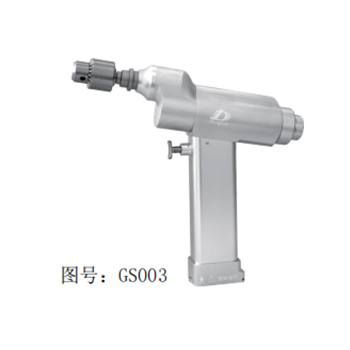
Procurement teams must carefully assess instrument metallurgy. Assessing surgical-grade stainless steel versus titanium alloys matters greatly for torsional strength. A hollow core inherently reduces the cross-sectional area. This structural reality makes material quality critical. Weak materials lead to intraoperative breakage. High-grade stainless steel offers superior hardness. It maintains sharp cutting edges longer than titanium. Titanium provides excellent biocompatibility but sometimes lacks the necessary edge retention.
Flute geometry dictates debris clearance. You must evaluate flute angles for optimal bone chip evacuation. Poor clearance causes bone chips to pack tightly inside the flutes. This creates severe friction. Friction generates intense heat. It causes thermal necrosis of surrounding bone tissue. A well-designed hollow drill bit features deep, polished flutes. They channel debris away from the cutting site rapidly.
Thermal management ties directly to flute design and sharpness. You need to analyze the cutting efficiency-to-heat ratio. Sharpness longevity dictates how many procedures an instrument endures. Heat generation must never exceed safe clinical thresholds. Temperatures above 47°C cause irreversible osteonecrosis. Dead bone fails to integrate. It leads directly to screw loosening. Sharp cutting edges minimize friction. They keep temperatures safe.
Dimensions and tolerances require precise matching. The internal cannula diameter must align perfectly with standard K-wire gauges. Common sizes include 1.25mm and 1.6mm. The fit should allow smooth sliding. It must possess minimal "play". Excessive space causes the instrument to wobble. Vibrational inaccuracy enlarges the bone hole. A tight tolerance ensures true trajectory maintenance.
Best Practices: Always match the manufacturer's recommended K-wire size exactly to the cannula internal diameter. Standardize your wire inventory to prevent intraoperative mismatches.
Common Mistakes: Using a dull instrument increases downward pressure. This raises the bone temperature rapidly. Discard any item showing visible edge wear.
Evaluating shank designs optimizes operating room efficiency. Facilities must examine coupling systems carefully. Quick-coupling hex shanks or standard AO connections offer massive advantages. They significantly reduce intraoperative tool-exchange times. Traditional Jacob's chucks require manual key tightening. They slow down the surgeon. Quick-coupling systems allow instant, secure attachment. They prevent slippage during high-torque operations.
Standardization reduces inventory chaos. You must consider the financial impact of consolidating instrument types. Relying on universal cannulated systems reduces tray clutter. The sterile processing department (SPD) handles fewer specialized trays. Consolidating platforms streamlines surgical preparation. It reduces the physical burden on nursing staff. Universal trays mean faster turnover between cases.
Facilities employ cost-per-use models to evaluate long-term value. You should compare the lifetime value of reusable high-grade items against disposable alternatives. Cheaper disposables often compromise cutting efficiency. They struggle in dense cortical bone. High-grade reusable models endure multiple cycles. They maintain sharpness. They offer predictable performance.
To maximize workflow efficiency, facilities implement the following steps:
Standardize all power tool couplings to a single format (e.g., AO quick-connect).
Audit surgical trays quarterly to remove redundant or outdated instruments.
Implement a strict usage-tracking system to monitor sterilization cycles per item.
Establish a clear retirement protocol for items reaching the end of their lifecycle.
The hollow core presents a significant sterilization challenge. It acts as a high-risk zone for retaining biological debris. Bone fragments and blood easily lodge inside the narrow channel. Evaluation protocols must include a rigorous review of the manufacturer’s Instructions for Use (IFU). Facilities must follow stylet cleaning procedures exactly. Enzymatic flushing breaks down hidden proteins. Ultrasonic cleaning vibrates stubborn debris loose. Skipping any step guarantees retained bioburden. This leads to dangerous surgical site infections.
Cross-contamination mitigation requires validated hospital equipment. You must ensure SPD equipment meets specific pressure-flushing standards. Cannulated instruments require ISO 17664 compliance. Standard spray washing fails to penetrate the internal channel. Technicians need specialized lumen-flushing adapters. They force cleaning solutions through the entire length. Validating these processes ensures patient safety. It protects the facility from liability.
Wear and tear monitoring prevents catastrophic intraoperative failures. Facilities must establish strict inspection protocols. Technicians should inspect internal cannula wear using magnification. They must also check external cutting edge degradation. A bent internal channel causes the K-wire to jam. A jammed wire spins inside the bone violently. Identifying microscopic cracks prevents breakage during surgery. Routine monitoring guarantees consistent surgical performance.
Effective procurement begins with a thorough needs assessment. You should audit current K-wire utilization rates. Review the existing inventory of power equipment. Ensure all new instruments offer full compatibility. Mismatched couplings disrupt surgery. Understanding your volume dictates how many trays you need.
Run a vendor evaluation pilot. Set up a 30-day clinical trial. Focus on specific trauma cases like hip pinning. Gather direct surgeon feedback. Ask them about tactile feel. Evaluate sharpness retention after multiple cases. Real-world usage exposes flaws unseen in brochures. Surgeon endorsement drives successful adoption.
Establish an SPD feedback loop early. Require mandatory sign-off from the sterile processing manager. They must confirm the facility's capacity to clean the items. Strict adherence to specific cleaning IFUs is non-negotiable. If SPD lacks the right flushing adapters, you cannot safely adopt the system. Their input prevents massive compliance failures.
Develop a final decision matrix. Weigh clinical precision and operational compatibility heavily. Document safety standards meticulously. Prioritize long-term performance over initial unit cost. Value lies in durability and successful patient outcomes.
Procurement Decision Matrix Framework | ||
Evaluation Criteria | Weight (%) | Key Focus Areas |
|---|---|---|
Clinical Precision | 40% | Cutting efficiency, trajectory accuracy, thermal control |
SPD Compliance | 30% | IFU clarity, lumen flushability, bioburden risk |
Operational Compatibility | 20% | Power tool coupling, tray consolidation |
Durability Metrics | 10% | Edge retention, material strength, cycle lifespan |
The cannulated system stands as a mandatory standard for precision trauma care. It eliminates the unpredictability of freehand techniques. It protects soft tissues and ensures accurate hardware placement. Transforming unstable fractures requires this level of exactness.
Effective procurement relies on balancing clinical performance with operational realities. You must align cutting efficiency and wire guidance with strict sterilization protocols. Tool compatibility matters just as much as surgical sharpness. Ignoring SPD requirements guarantees implementation failure.
Actionable Next Steps:
Prioritize vendors offering transparent durability data and comprehensive IFUs.
Conduct an immediate audit of your SPD's lumen-flushing capabilities.
Schedule a clinical pilot focusing on high-volume procedures like femoral neck fixations.
Mandate specialized training for SPD technicians before introducing new cannulated inventory.
A: A solid drill bit is used for freehand trajectory drilling. It relies entirely on surgeon control. A hollow drill bit features a central channel. It allows the instrument to slide over a pre-placed guide wire. This ensures a precise, predetermined pathway.
A: By following a guide wire, it eliminates bit "walking" on the bone surface. It ensures an accurate trajectory for cannulated screws. It reduces the need for multiple attempts. This preserves critical bone stock and shortens procedure times.
A: The narrow internal cannula frequently traps bone fragments and blood. Standard washing cannot clear this debris. Strict adherence to flushing protocols is mandatory. Facilities must use designated cleaning stylets and ultrasonic baths to prevent retained bioburden.
A: No. "Hollow" refers to the cannula in the center of the instrument. "Hex" refers to the hexagonal shape of the base or shank. The hex shank provides quick coupling to power tools. An instrument can feature both a hollow core and a hex shank.


